

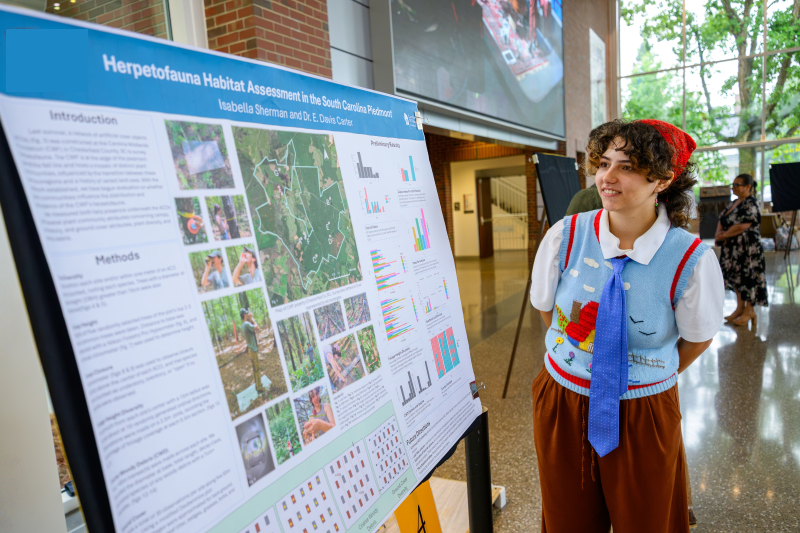
Location can change how a problem looks. The Geographic Information Systems (GIS) minor teaches you to work with maps and spatial data so you can see patterns, compare places and bring a geographic perspective to your major. You might examine changes in an ecosystem, access to public services or the way a community grows. By combining technical skills with knowledge from another discipline, you can investigate questions that would be harder to answer without considering place.

Student stands in front of project poster mapping habitats and comparing conditions across locations.

What You'll Study

Geographic Information Systems

You’ll learn to work with different kinds of spatial data, create maps and analyze relationships between places. A course in computing or information systems adds another technical perspective, while electives let you explore a field where GIS can be useful. You’ll bring those skills together in an approved research project, independent study or internship.
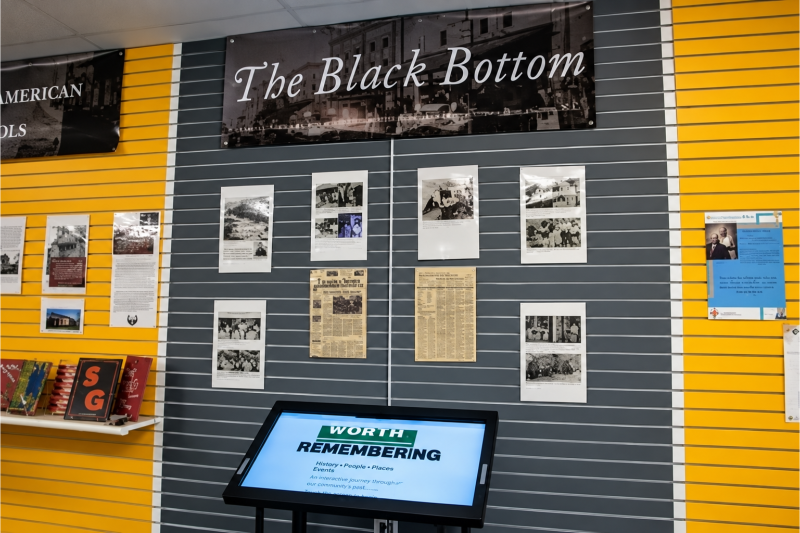
Museum wall display "The Black Bottom" and interactive screen: "Worth Remembering"

Connect it to Your Major

What you study in your major helps you decide which places, patterns and relationships matter.

For example:

  • Environmental Studies: Map changes in land cover or habitats to investigate conservation questions.
  • Public Health: Examine how distance and transportation may affect access to health services.
  • History: Use historical maps and community stories to trace how neighborhoods and local businesses have changed over time.

These are possible directions. Your elective courses and capstone give you room to apply GIS to an area that interests you.

Minor Requirements & Courses

The GIS minor is a 22 semester hour program combining foundational study of spatial data with a computing or information systems course, electives from other disciplines and an approved capstone experience.

Required courses - 8 semester hours

  • Introduction to GIS: Vector
  • Introduction to GIS: Raster

Computing or information systems course — 4 semester hours

Choose one:

  • Data Science and Visualization
  • Computer Science I
  • Management Information Systems

Courses in other disciplines — 8 semester hours

Select two courses from the following:

  • Applied Econometrics
  • Urban Economics and Planning
  • Introduction to Environmental Science
  • Restoration Ecology
  • Wildlife Ecology
  • Biogeography and Conservation
  • Water Resources Management
  • Planet Earth: Global Physical Environments
  • Global Environmental Change
  • Global Marketing
  • Introduction to Epidemiology
  • Global Health
  • Research Methods in Political Science and Public Policy
  • Public Opinion Polling
  • Public Administration
  • Facility and Venue Management
  • Statistical Computing for Data Management

Capstone Project - 2 semester hours

You may pursue Independent Research (GEO 4999),  an Independent Study (GEO 4991) or an Internship in Geography (GEO 4985) with significant GIS component and approval from the GIS program coordinator.

Your Faculty

Faculty traditionally associated with the minor in Geographic Information Systems