

The new model for legal education
School of Law
In 2014, Elon Law set out to answer an ambitious question: Could law school take less time, cost less, and ensure every graduate was prepared with real-world experience in practicing law?
At the time, pressures were mounting. Law school enrollment was cratering nationwide. Critics were vocal: Legal education was too expensive, took too long and was disconnected from the profession — concerns now echoing across higher education.
At Elon Law, faculty seized the opportunity to innovate by rethinking the structure of legal education itself. What emerged in fall 2015 was a 2.5-year J.D. built around the day-to-day work of lawyering.
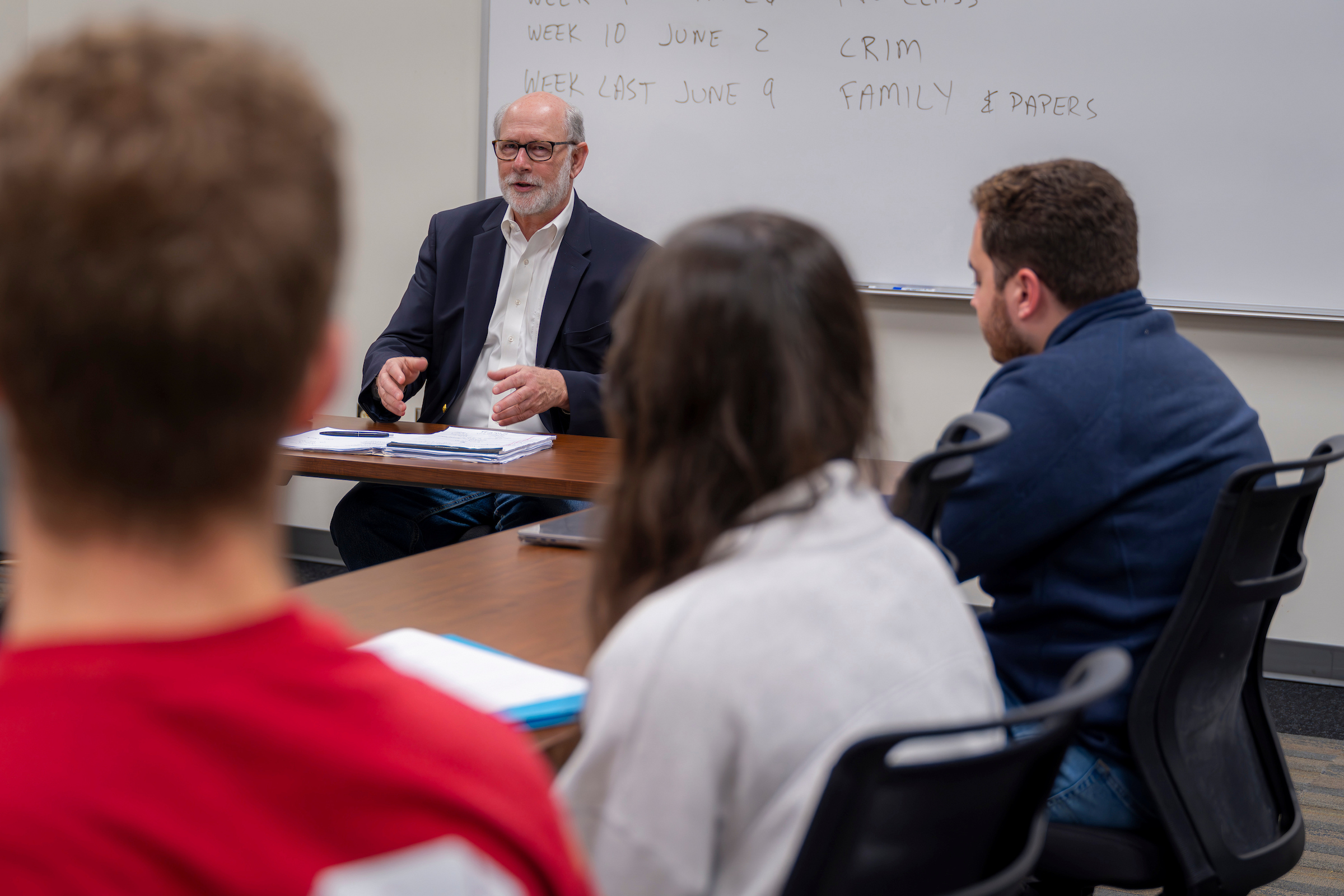
Professor Luke Bierman served as dean of Elon Law from 2014-2021 and worked with faculty to adopt a 2.5-year curriculum focused on experiential learning.
“We wanted to connect what students learn in the classroom with what lawyers actually do,” said Dean Emeritus Luke Bierman. “We wanted to address the amount of debt students were taking on.”
More than a decade later, the results are clear. Elon Law graduates enter the profession sooner, with real experience and less debt than their peers. Now, the school is preparing to extend that model to Charlotte, North Carolina, with plans to launch a full-time program there in Fall 2027.
Bierman arrived as dean in 2014 and, within six months, worked with faculty to redesign the curriculum from the ground up. The shift was structural: from a traditional three-year, six-semester model to a seven-trimester program organized around courses that build on one another.
“There was this logical progression of learning: observation and introduction, simulation, and then actual doing,” Bierman said.
There was this logical progression of learning: observation and introduction, simulation, and then actual doing.
That progression leads to the Residency-in-Practice Program, another innovation that sets Elon Law apart. For 10 weeks, every second-year student steps into full-time legal work alongside licensed attorneys in firms, judicial chambers and organizations — interviewing clients, drafting documents and, in some cases, appearing in court.
“It’s not tasting legal practice. It’s living it,” said Dean Zak Kramer. “That’s the deepest kind of learning. You can’t graduate from Elon Law and not know how to practice law.”
Throughout, students remain connected through a required course that ties their work back to the curriculum. “The residency isn’t separate from the curriculum, it’s part of it,” said Vice Dean Alan Woodlief. “Students are working full time while remaining engaged academically, reflecting on what they’re doing and why. We’ve seen how effective it is when students build skills in sequence and apply them in real settings.”
“It’s the full-time engagement that is the key element here,” Bierman added. “The intention was to send out students and bring back lawyers.”
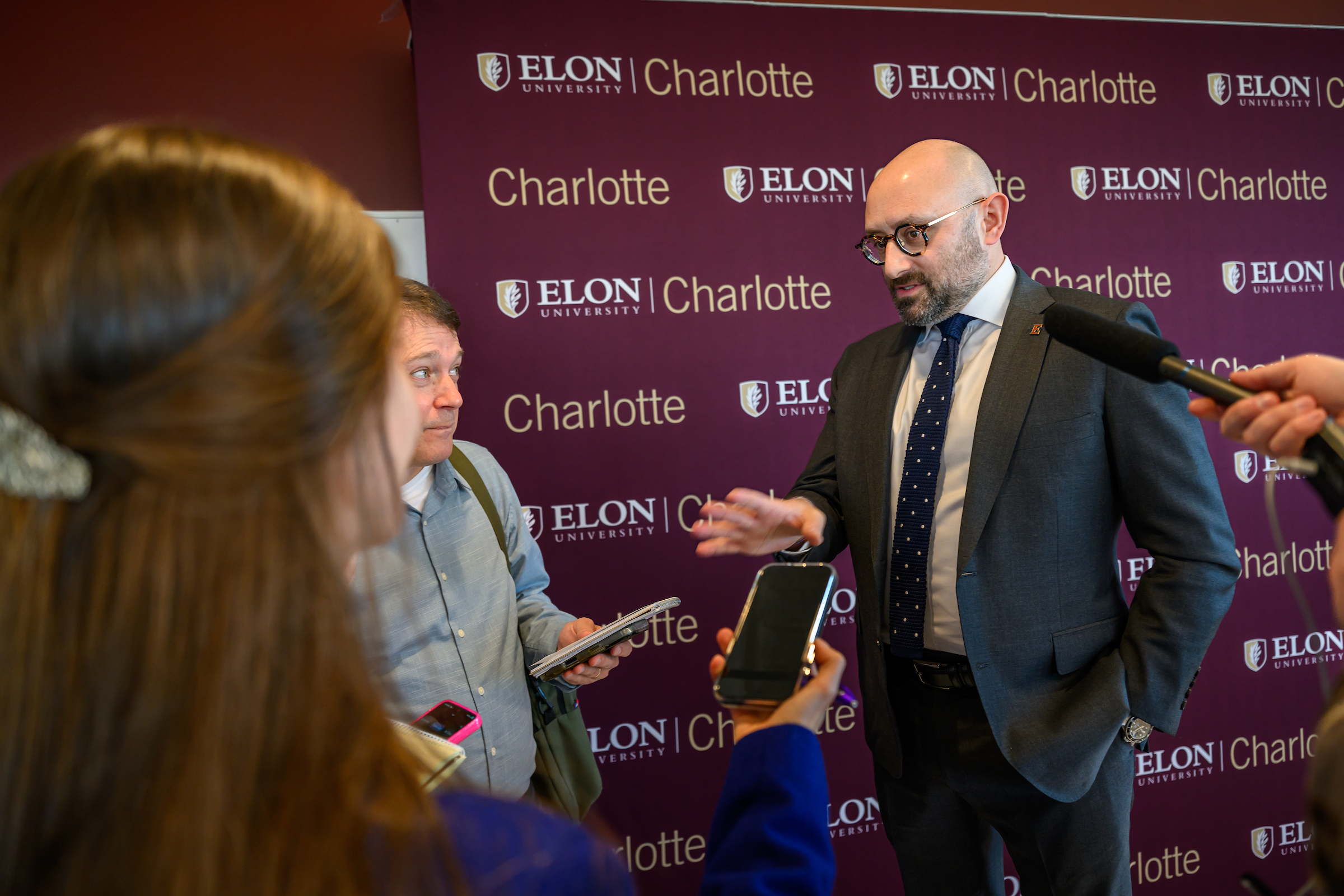
Dean Zak Kramer at the public announcement of Elon Law’s intent to offer its innovative curriculum on the campus of Queens University of Charlotte beginning in Fall 2027. Elon and Queens are in the process of merging with final approval expected in the next 18-24 months from SACSCOC and the U.S. Department of Education.
By graduation, legal work is no longer theoretical. It’s familiar. And the cost of law school? By 2021, Elon Law students graduated with about 30% less debt than their peers.
These curricular innovations have drawn national recognition. PreLaw Magazine consistently rates the program at an A+ in its annual review of law schools for best practical training. This past winter, the National Jurist named Elon Law to its inaugural Justice & Opportunity Honor Roll for expanding access to legal education.
“We’re preparing students for what the profession actually demands,” Kramer said.
In Charlotte, that same philosophy is taking shape through the part-time Flex Program, now in its second year and quickly growing, and a full-time J.D. program the horizon — extending a model built on access, purposeful structure and transformative experiences.
KEY TAKEAWAYS
- Design programs around outcomes.
Start by identifying what graduates must be able to do, then build curriculum backward from those goals. Structural changes — including calendar, sequencing and delivery — can follow. Elon Law began by identifying and strengthening courses that develop essential professional knowledge and skills. - Make immersive experience central to learning.
Short-term or peripheral experiences have limits. Sustained, integrated practice opportunities — tied directly to academic work — deepen learning and better prepare students for professional roles. When learning is cultivated in the workplace and reinforced through structured reflection, its impact is amplified. - Treat innovation as a design choice, not a one-time change.
Effective curricular models are intentional. They align structure, experience and outcomes — and can extend to new formats and locations without losing their core purpose. Elon Law has applied this approach in Charlotte through its Flex Program, allowing place-bound students and working professionals to earn a J.D. while benefiting from experiential learning and close mentorship.