

Reimagining Engineering: How Elon is Building a Different Kind of School
For decades, university departments that teach engineering and computer science have followed a familiar model: large programs, research-driven faculty and a curriculum designed around technical mastery first, everything else second.
That model is now under pressure.
Artificial intelligence is reshaping industries faster than universities can revise syllabi. Employers are placing new value on communication, adaptability and ethical judgment. And institutions, especially those outside the largest research universities are beginning to ask a more complicated question: What does it mean to prepare engineers today?
Elon University’s answer isn’t with a single program or initiative. Instead, faculty are shaping the foundation of a new School of Engineering and Computing built around a different set of assumptions about how engineers and computer scientists learn, how faculty collaborate and what students will ultimately need to succeed.
Set to launch in Fall 2026, those deeply involved in the process have consistently and unanimously noted one trait now shaping their work: Elon’s current culture of creativity and flexibility requires time, patience, and intentionality to flourish.
“It’s such an exciting time,” said Professor Sirena Hargrove-Leak, who joined the faculty when Elon only offered a dual-degree program in affiliation with engineering schools at other universities. “It felt clear when I arrived that we would likely never have a School of Engineering here. To be at this moment is almost surreal.”
Innovation as a mindset, not a program
At many institutions, innovation is something layered on top of existing structures. You might have a new center, a new initiative, a new degree. At Elon, faculty say, you’ll find something more foundational: a willingness to question assumptions.
Computer science faculty, for example, are already reconsidering what counts as “fundamentals” in a world shaped by AI. Tasks that once defined technical mastery are increasingly automated. Expectations are shifting and not in predictable ways.
Faculty describe a model that prioritizes adaptability: students who can think critically, communicate clearly and understand the broader context of the problems they are solving. Technical skills remain essential, but they are no longer sufficient on their own.
The goal is not just to produce engineers, but to produce graduates who can navigate ambiguity and recognize when technology, including AI, falls short.
“The difference at Elon is our momentum,” said Associate Professor Scott Wolter, chair of the Department of Engineering. “In a smaller setting, we can tailor our program more quickly to meet the needs of students. We also have close interactions with other schools and deans at Elon, and we can learn quite a bit from them as they’ve grown, too.”
The secret, Wolter noted, is recruiting the right faculty and staff. “We’re looking for people who are super focused on students. They understand that is their job.”
Elon’s identity as a liberal arts university connects directly to how faculty describe the way engineering students are not siloed. Instead, they are embedded in a campus where collaboration across disciplines is routine and expected. That environment is already influencing how programs are built.
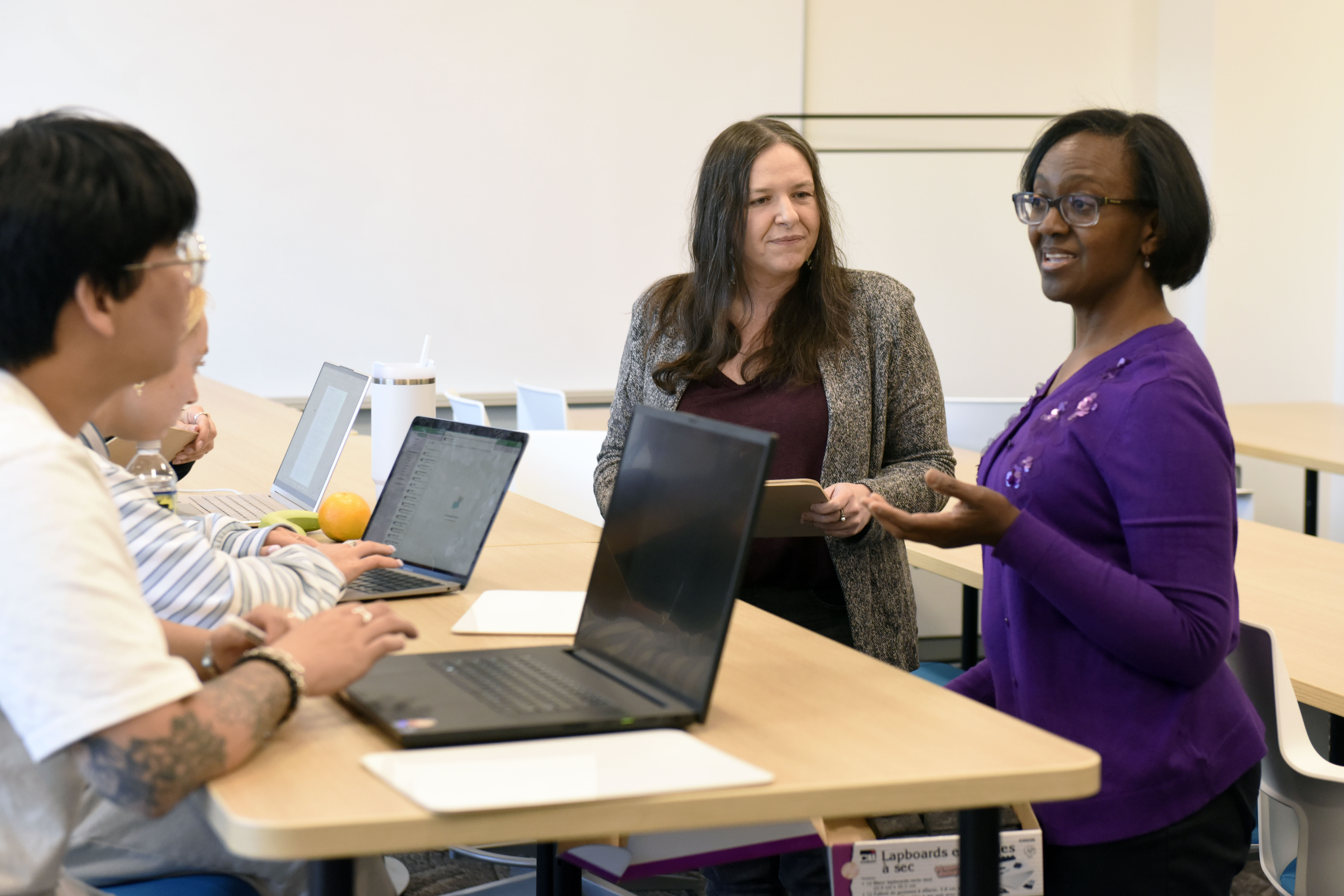
Professor Sirena Hargrove-Leak (right) in the Department of Engineering and Assistant Professor Helen Orr (center) in the Department of Religious Studies team teach “Engineering a Better World.”
For example, “Engineering A Better World” does more than meet accreditation requirements. The course is team-taught by Hargrove-Leak and Helen Orr, an assistant professor of religious studies, to reframe how engineering students think about responsibility, decision-making and the human consequences of their work in the context of faith traditions.
Elsewhere, faculty are exploring connections with entrepreneurship, communications and business as integral components of the student experience.
The result is an approach that begins with questions instead of technical approaches: Why does this problem matter? Who does it affect? What are the broader implications? In that sense, Elon’s model challenges the longstanding assumption in engineering education that technical rigor and breadth of perspective exist in tension.
Integration by design
One of the most visible expressions of that philosophy is the decision to house engineering and computer science within the same school. While not unique, it’s far from universal in higher education. That decision was both cultural and structural.
Faculty describe an environment where collaboration is not forced, but natural. Conversations between departments happen frequently and informally. Ideas move quickly. Barriers are low.
“It’s not just the courses, it’s the culture that you’re building,” said Associate Professor Pratheep K. Paranthaman, who teaches game design and user experience in the Department of Computer Science. “We can set values early that will act as guiding principles. These are the moments, and these are the opportunities, for us to come together to think broadly about things.”
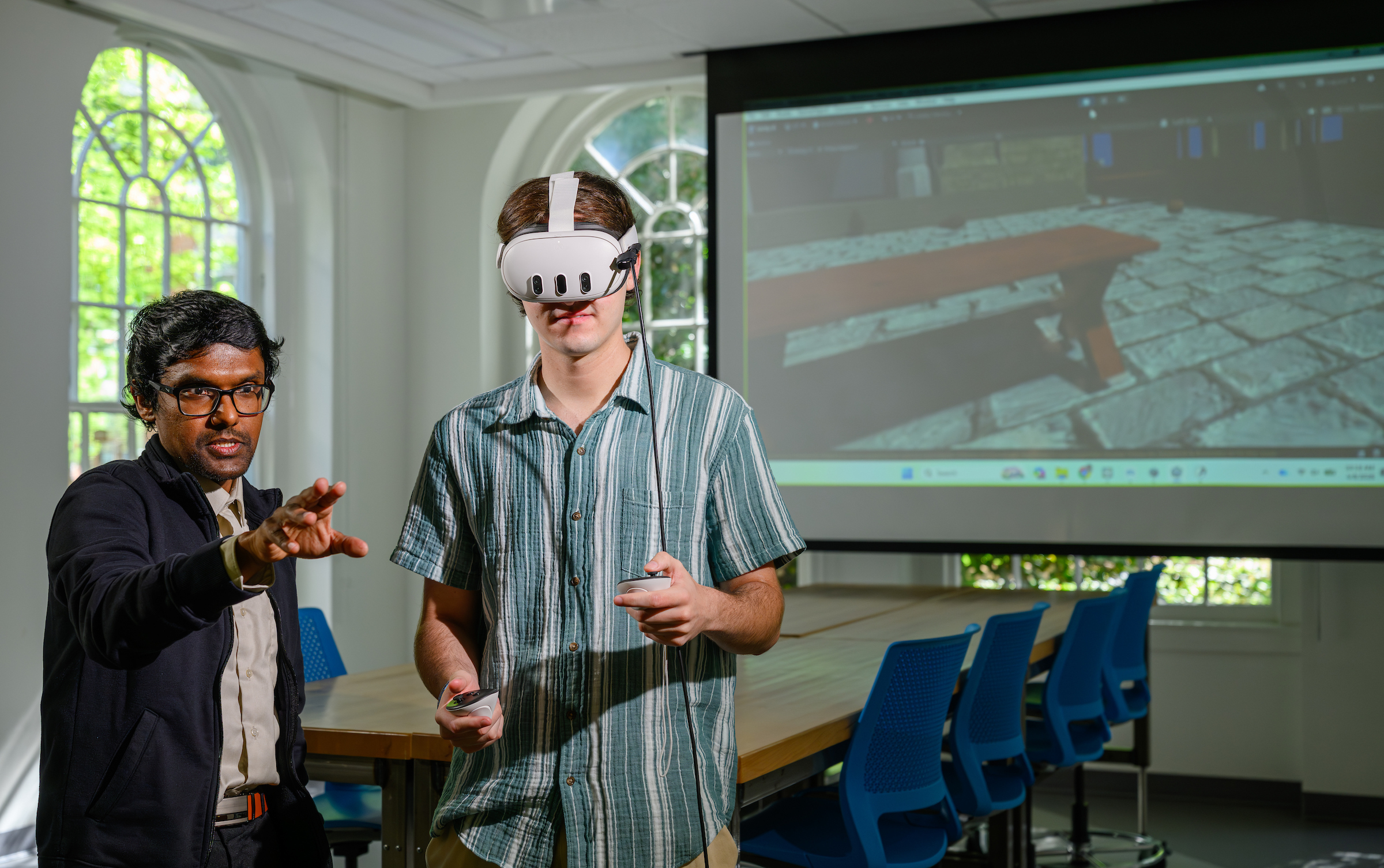
Associate Professor Pratheep Paranthaman in the Department of Computer Science works with students in virtual reality courses he teaches.
Even in the early stages of planning, the dynamic described by Paranthaman is already producing new possibilities, from interdisciplinary coursework to shared student experiences like cross-disciplinary design challenges and competitions.
At the same time, the school is being designed to maintain strong ties ties beyond its own boundaries. Programs in areas like cybersecurity and game design connect to business and communications. Partnerships with industry extend into the surrounding region, including Charlotte, Greensboro and Burlington.
The goal is to create a network that reflects the increasingly interconnected nature of the fields themselves.
The advantage of being small
If Elon’s approach is distinctive, much of that distinctiveness comes from something often seen as a limitation: scale.
Without the size or the research intensity of large engineering schools, faculty say that Elon is leaning into what it can offer instead: access, agility and proximity.
Students work closely with their professors from their first year. Research opportunities are designed to include undergraduate students. Faculty know one another, and collaboration happens face-to-face, often during daily interaction.
That proximity accelerates decision-making. Curricular changes can happen quickly. New ideas can be tested and refined without navigating layers of bureaucracy. It also allows for a level of intentionality that is harder to sustain in larger systems. Faculty can design experiences around students, rather than fitting students into existing structures.
“Small class sizes help, with high interaction and students building real things,” said Professor Duke Hutchings, chair of the Department of Computer Science. “And at large institutions, where research is abundant, it’s not always accessible to undergrads. At Elon, undergraduates can reliably get into labs, work with faculty, discover what research is, and see it as a potential path.
“If you’re ‘lost’ here, you shouldn’t stay lost for long.”
In practical terms, that led to innovations such as a dedicated first-year engineering coordinator — a role focused entirely on helping students transition into the program — and close collaboration with departments like mathematics to ensure students are prepared for the rigor of the curriculum.
Culture as infrastructure
For all the attention to programs and partnerships, faculty consistently return to a less tangible factor: culture.
The new school is being built around a shared understanding of what it means to teach at Elon. Faculty are hired for their expertise and for their commitment to mentorship and student engagement.
That emphasis shapes everything from classroom experience to research design. Even when faculty pursue external funding or scholarly work, their efforts are framed as opportunities for student involvement.
It also influences leadership priorities. In recruiting Dr. John Walz to serve as the inaugual dean of the new school, faculty looked for someone who could extend that culture – someone who valued collaboration, understood the institution’s mission and could connect the school’s work to broader opportunities.
In the end, the new School of Engineering and Computing is positioning itself around the kind of distinction that emphasizes connection over scale, adaptability over specialization, and teaching over traditional measures of prestige.
The premise is straightforward, even if the execution is complex: in a moment of rapid technological change, the most valuable engineers are the ones who can learn new approaches quickly, communicate clearly and think across boundaries.
Or, as one faculty member put it simply, the goal is to create “well-rounded, adaptable graduates who can do many things.”
“If you have lots of people who have been around for decades, institutions can develop inertia. We don’t really have that,” said Associate Professor Jonathan Su in the Department of Engineering. “While academics naturally like to debate ideas, we’re small enough that we can move forward, implement change, and come together and make things happen.”
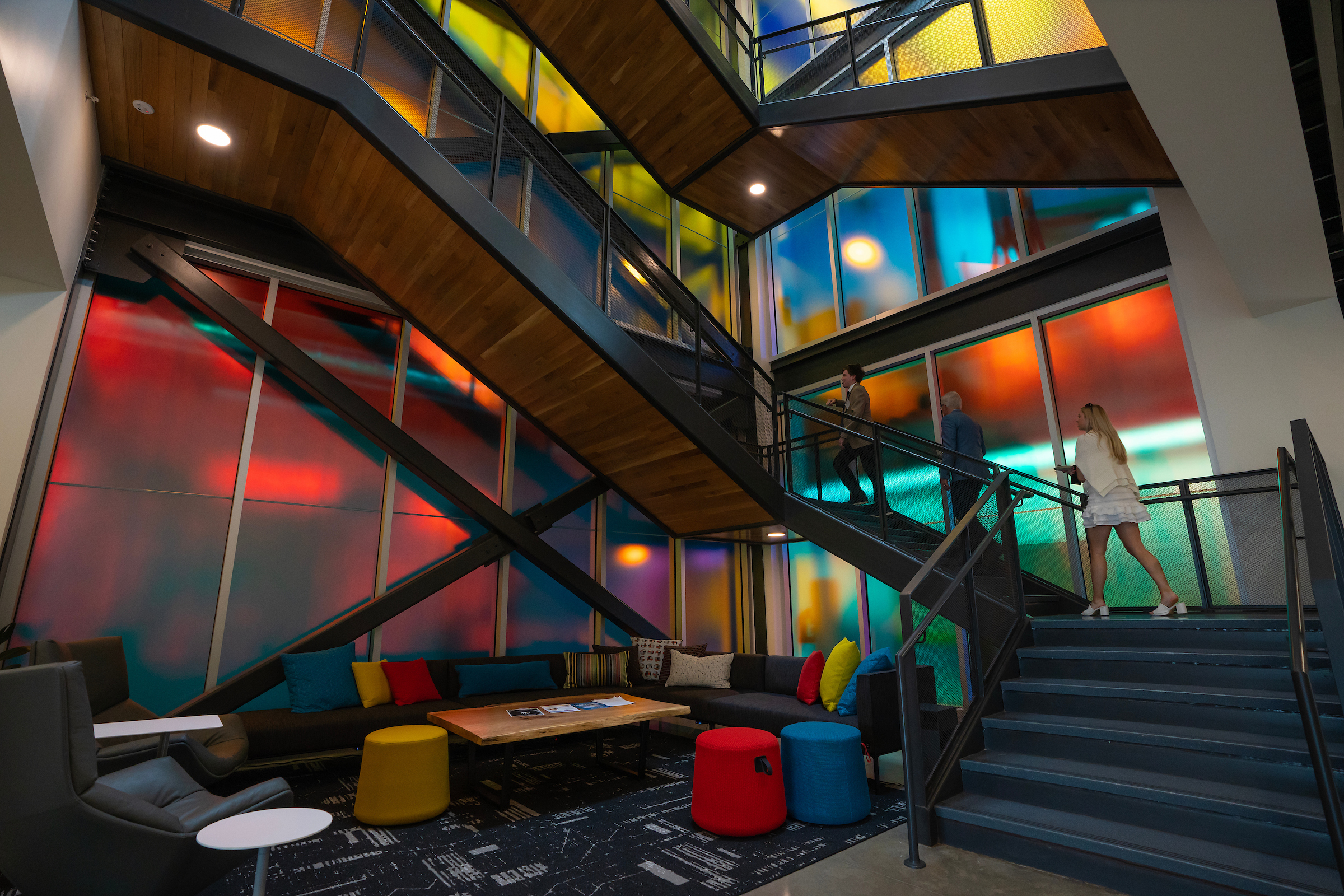
Founders Hall at Elon University, home to the School of Engineering and Computing set to launch in Fall 2026
KEY TAKEAWAYS
- Start with what already works on your campus.
Before designing new structures, identify the practices, partnerships and cultural strengths that are already effective. Build from those assets rather than importing external models that may not align with your institution. - Design programs for flexibility, not fixed outcomes.
Do more than lock curricula into current industry demands. Instead, emphasize skills like problem framing, collaboration and ethical reasoning so graduates can adapt as technologies and career pathways evolve. - Embed collaboration into everyday operations.
Interdisciplinary work should be built into hiring, curriculum design and governance rather than added later as a feature. Create regular, low-barrier opportunities for faculty across disciplines to co-develop courses and projects.