


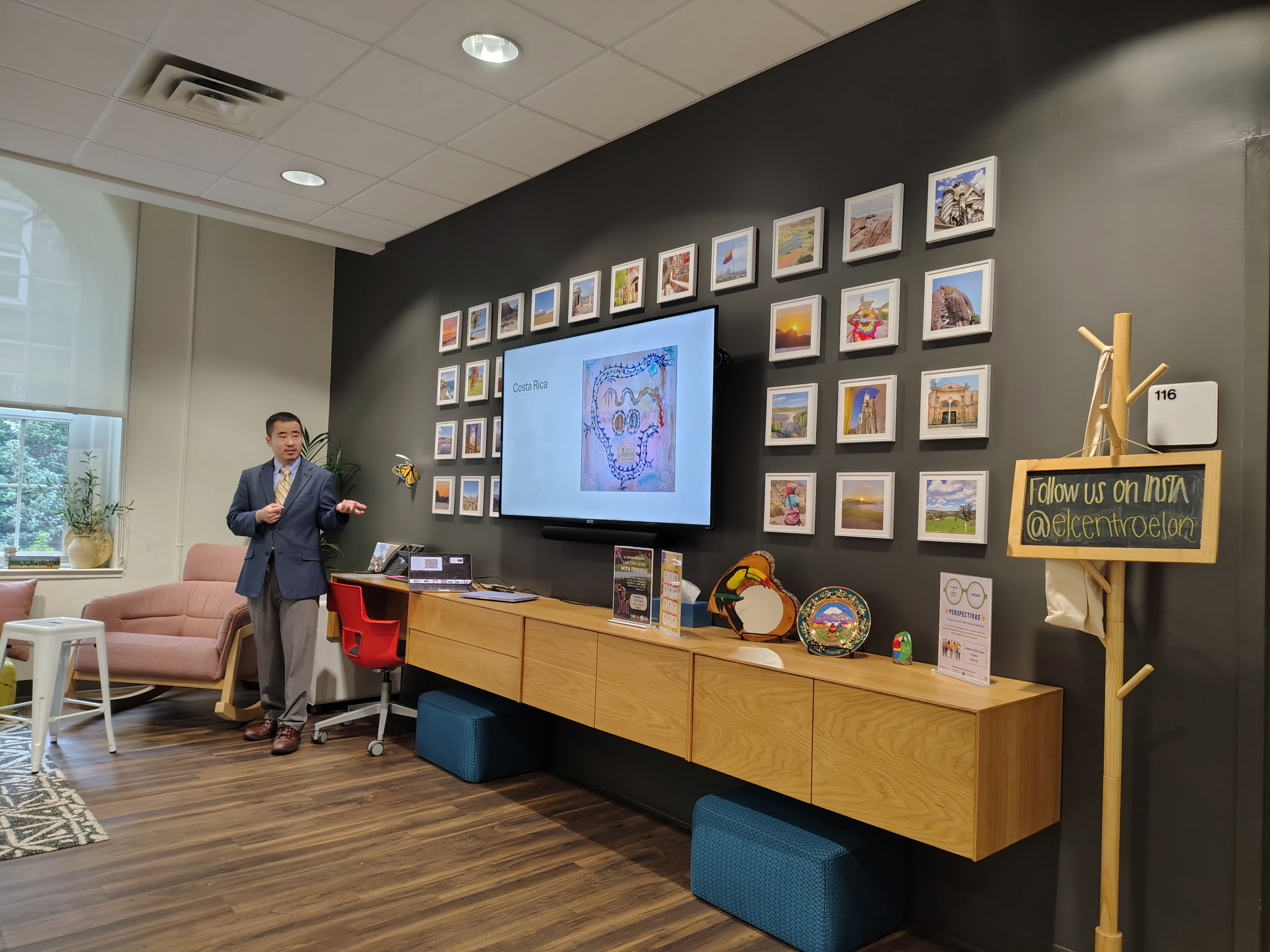
Assistant Professor Francisco "Paco" Chen-López brought fresh perspectives on Latin American identity during his visit to Elon University. Through his keynote address and classroom visits, he revealed how Chinese migration has impacted Latin American history and culture.
As part of the “Latin American Research Series”, Elon University’s Latin American Studies welcomed Francisco ‘Paco’ Chen-López, assistant professor of Spanish at Spelman College.
On Sept. 24-25, 2025, Chen-López’s two-day visit invited students to reflect on their understanding of Latin American identity and migration as he shared his innovative research on the representation of Chinese communities in Latin American literature, cinema, and visual arts, which is a topic that opened new perspectives for students and community members across multiple disciplines.
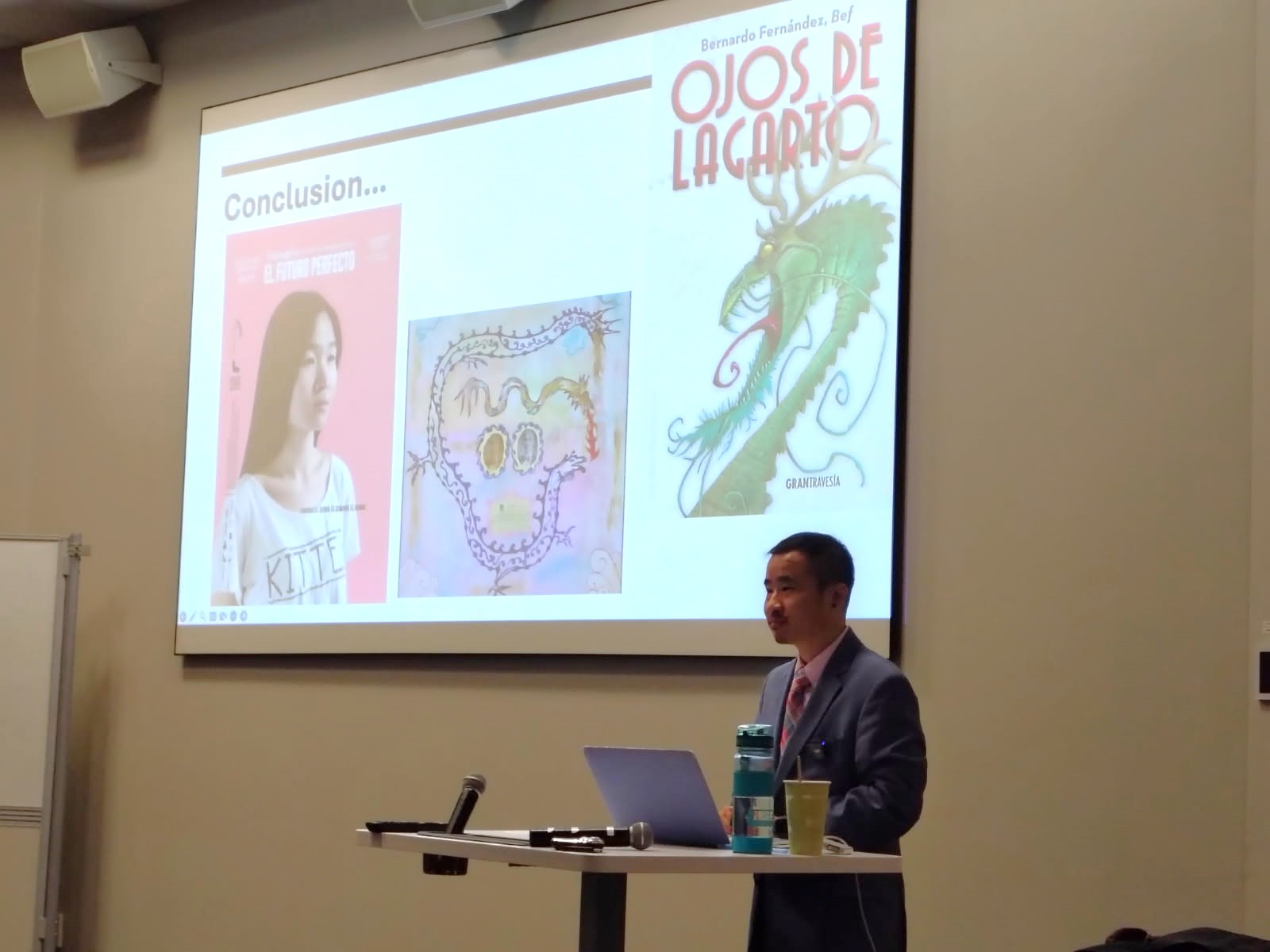
Chen-López’s keynote address, “Affective Mapping: Tracing the Chinese Diaspora in Latin American Literature, Cinema, and Visual Arts,” examined how Chinese identity and history are portrayed in creative works throughout different Latin American countries: Mexico, Costa Rica, and Argentina. His work traces how emotional responses to Chinatowns and Chinese neighborhoods have evolved over time and explores how the very concepts of “China” and “Chineseness” have shifted in response to changing geopolitical dynamics.
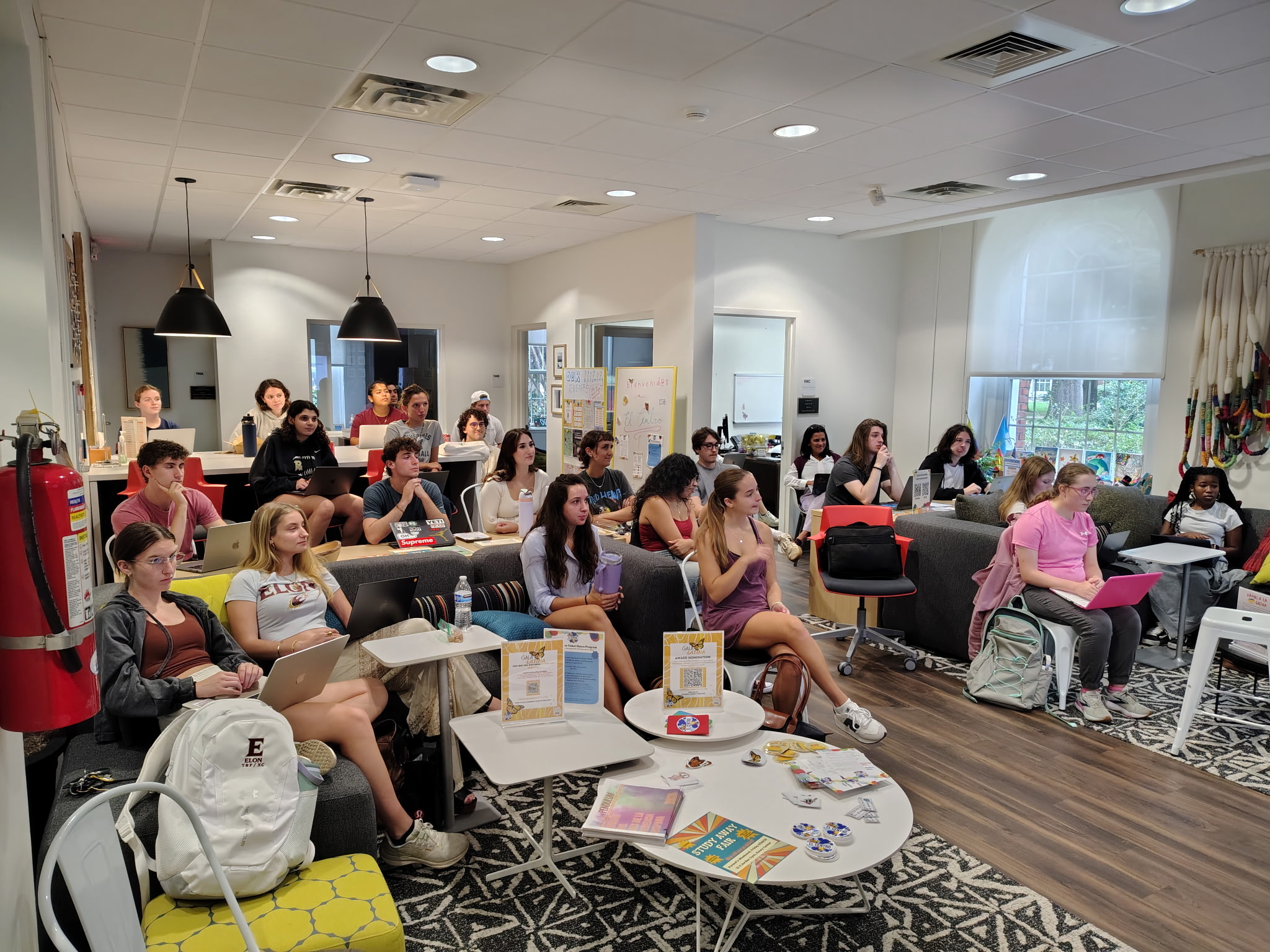
The visit extended far beyond a single lecture. Chen-López engaged directly with students in various courses in the classrooms and in El Centro, including “Human Migrations”, “Medical Spanish”, “Growing Up in the Spanish Speaking World”, “In Search of Identity, Innovation and Social Protest Theater”, and COR1100. He also met with student members from the Latin American Studies program, the Spanish Club, and the Chinese Club during a community breakfast, fostering cross-cultural dialogue.
For many students, the presentations sparked revelations about migration patterns they had never considered. Anette Cruz ’28, reflected on how the experience transformed their perspective
“Previously when thinking about migration to Latin American countries it never really came to my head to think about countries like China,” said Cruz. “When I would think about migration, I would think it was mostly within Latin American regions. But after learning about the impact Chinese migration has had on countries like Mexico, Costa Rica, and Argentina, it really made me think about the significance of it. I was able to see that through symbolism shown to me in Mexican readings, Argentinian movies and Costa Rican paintings, and to me I found that very interesting because again, I feel as if I would have overlooked that if I was presented with it. Overall Chinese diaspora in Latin American countries shown through historical contexts and symbolism in art is something new that I learned today, something that has opened my eyes a little more when talking about migration to Latin American countries.”
Chen-López’s interdisciplinary approach demonstrated how overlooked communities have shaped Latin American culture in profound ways. By examining representations of “China” and “Chineseness” in Latin American art, literature, and film, he sparked a dialogue among students and the broader Elon University community on the importance of interdisciplinary research and looking beyond dominant narratives to discover the multiple histories of a society.
The Latin American Research Series is presented by Latin American Studies and sponsored by the Department of World Languages and Cultures; Peace and Conflict Studies; El Centro; International and Global Studies; Center for the Advancement of Teaching and Learning; Women, Gender, and Sexuality Studies; Isabella Cannon Global Education Center; the Department of Philosophy; and Global Films and Cultures.