


The new course, offered by Associate Teaching Professor of Communication Design Randy Piland, blends hands-on projects and flight simulations with discussions about ethics, privacy and the broader impact of drone use.
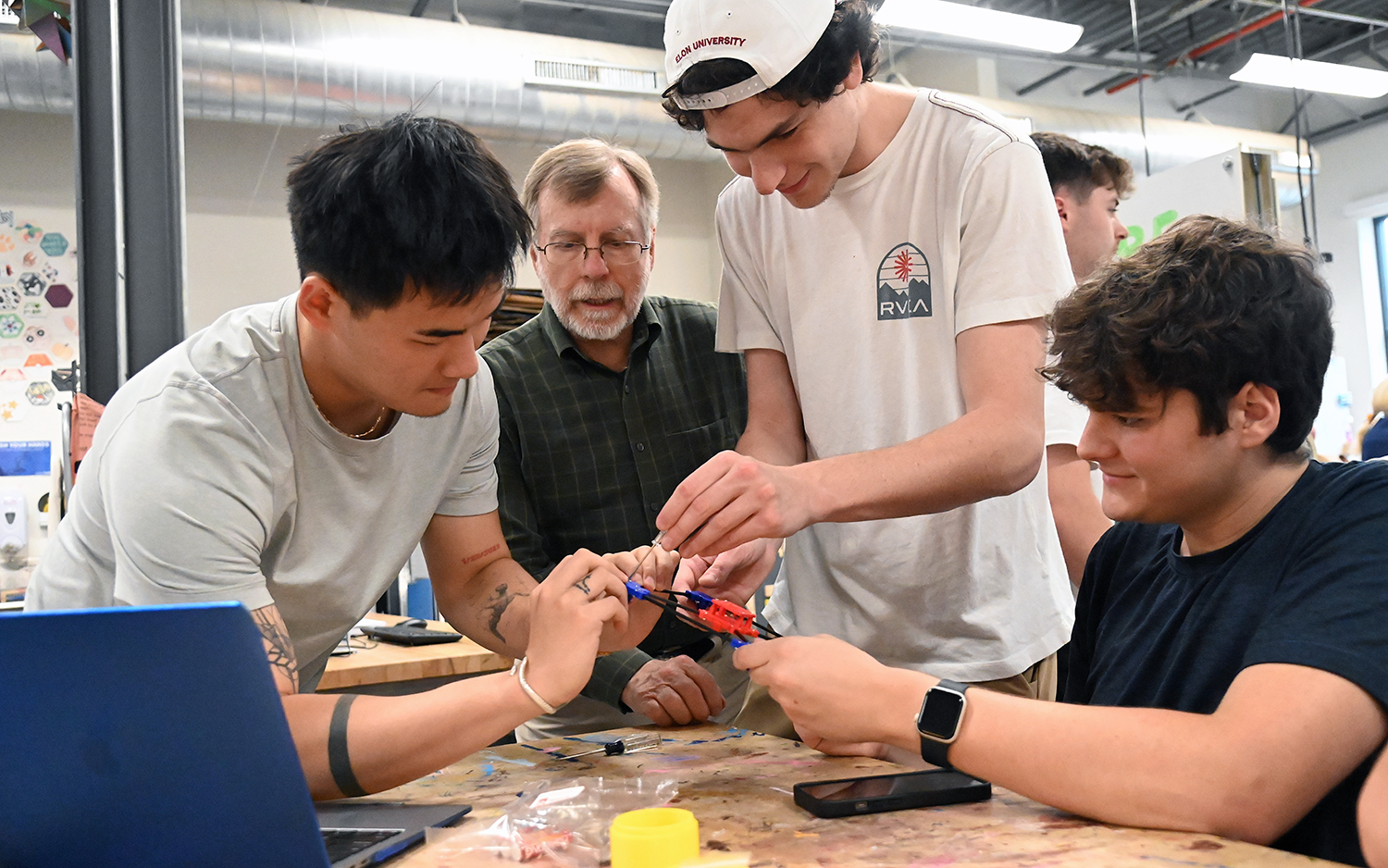
On a mid-September afternoon in a first-floor classroom in Long Building, students huddled over tables to finish their drone builds, adjusting miniature motors, securing blades and testing their wiring. Occasionally, a tiny screw or component went missing, prompting a frantic search.
The assembly had begun a week earlier in The Maker Hub, but the assignment – and all its small pieces – proved too much for a single class period.
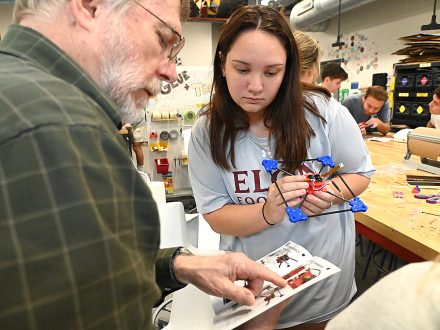
Among the students was Ali Steele ’27, a computer science major from rural Heathsville, Virginia, who – thanks to a high school drone program – already has her FAA Part 107 certification. She even spent part of her summer surveying farmland via drone. Most classmates, however, were far greener, with little to no drone experience but plenty of curiosity.
This range of expertise is exactly what Associate Teaching Professor of Communication Design Randy Piland envisioned when he created “Drones and Society: Balancing Innovation and Accountability,” a new COR Capstone course offered for the first time this fall. The class explores the fast-growing world of unmanned aerial systems from multiple angles – history, technology, ethics, and hands-on flight.
“The need for this course comes from the way drones are now woven into nearly every part of life,” Piland said. “They are delivering goods and medical supplies, aiding search and rescue, supporting first responders, mapping, and producing photography and videography for media, real estate, and advertising – along with military applications. The growth has been staggering, and it’s clear that our students need to critically examine drones not just as technology, but as a force that shapes society.”
For a closer look at the class, check out this Flickr album.
The class roster – all seniors – reflects the wide reach of drone technology, with majors including strategic communications, business analytics, sport management, computer science, nursing, elementary education and others.
While Steele arrived with five years of drone experience, she saw Piland’s class as a way to expand her perspective. “I knew this course would offer a viewpoint that I have not previously studied, which is the more social and economic impact,” she said. “I might know a bit about the physical structure of the drones, but not so much about the impact they’ve had on society.”
Piland brings his own deep background. He earned his FAA Part 107 certification eight years ago and has kept up with the recurrent exams every two years since. He also completed the AUVSI Trusted Operator Program (TOP) Level One Certification two years ago and organizes Elon Drone Day, which attracts more than 200 drone enthusiasts and pilots to campus each fall.
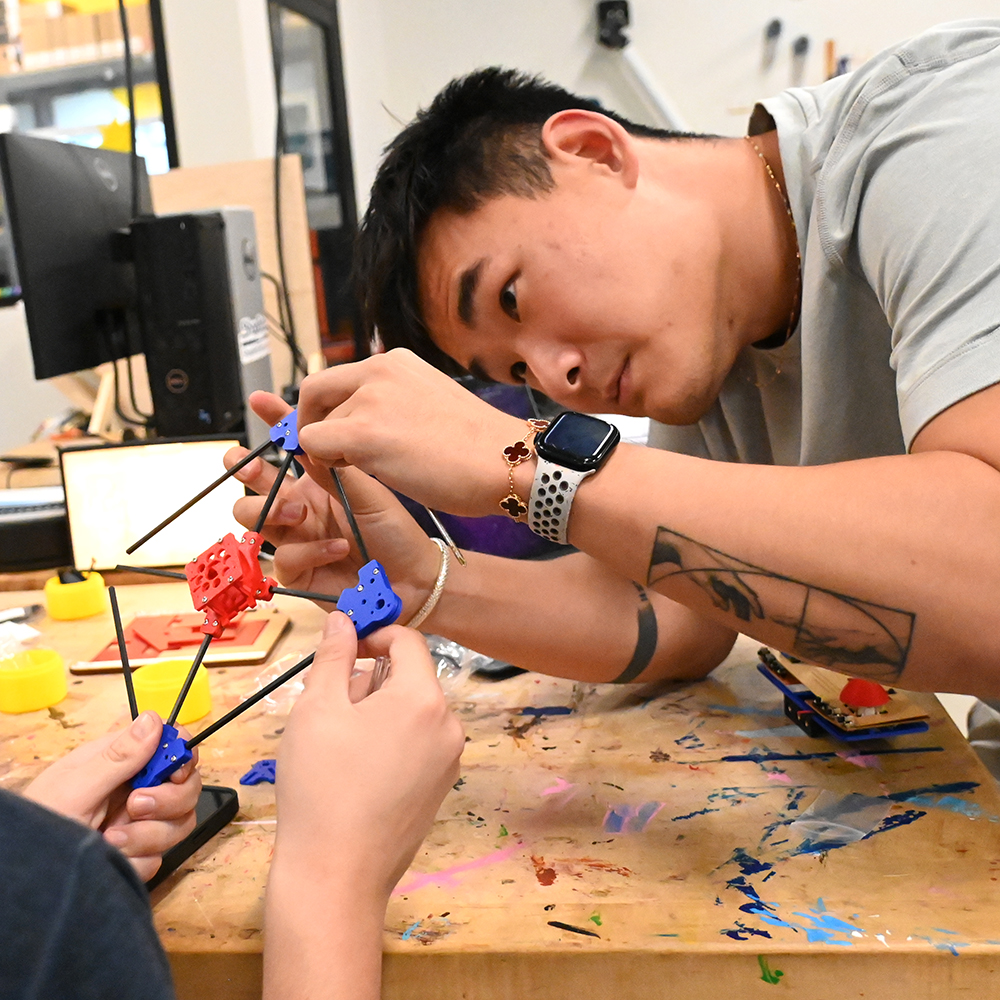
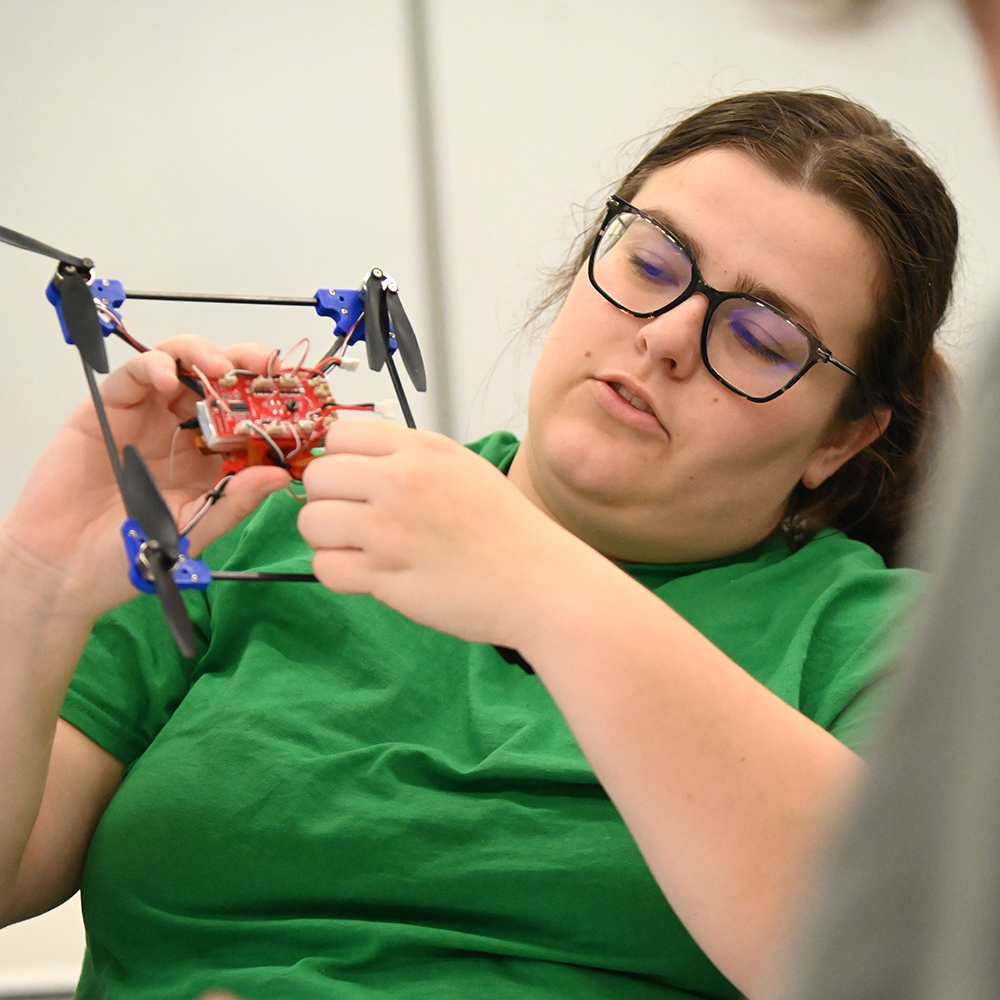
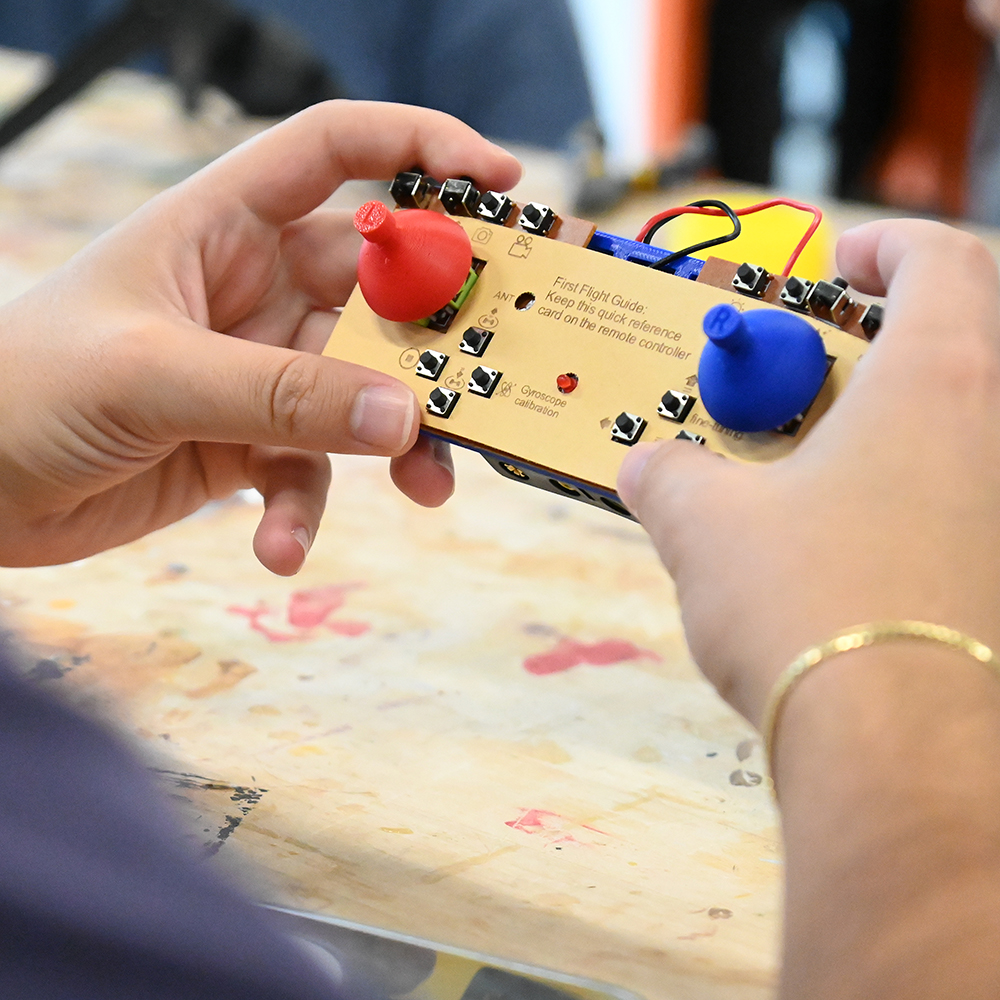
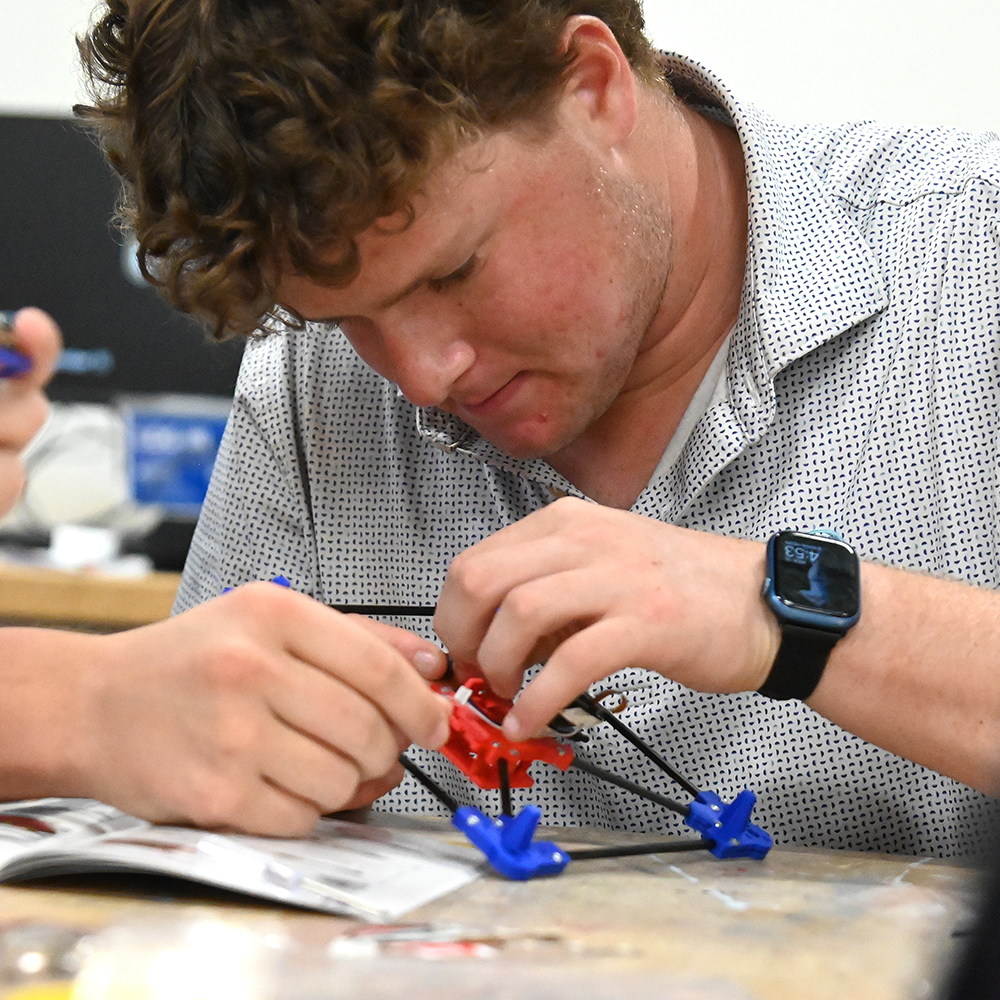

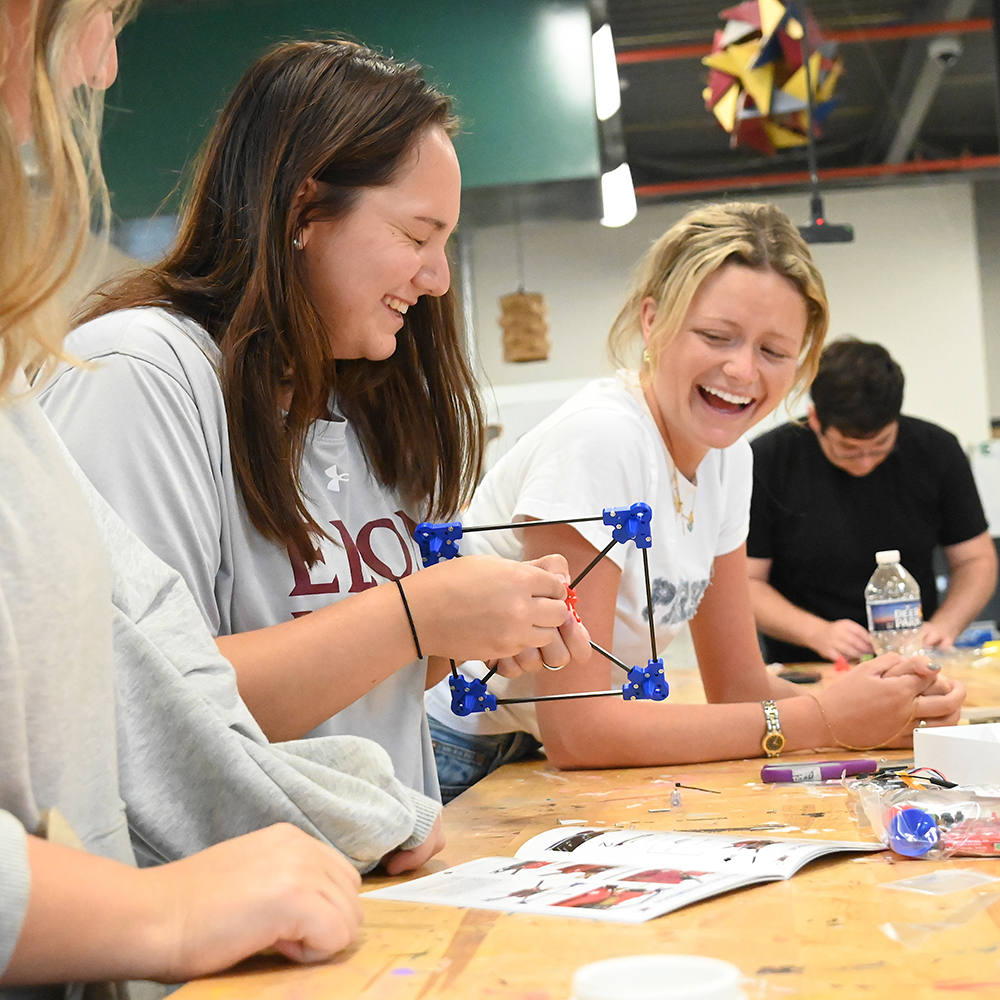
In the first week, students completed the Recreational UAS Safety Test (TRUST) certification, which all recreational pilots are required to pass. Then the hands-on work began. Students built small drones from assembly kits – a task that challenged even those with prior experience.
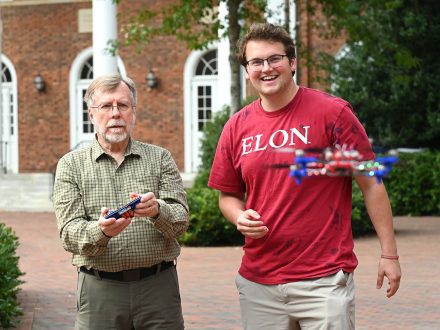
Borland found the assembly demanding but rewarding. “It was a little more difficult than I originally thought, but it was a great experience getting to figure it out and work with classmates,” he said. “The hardest part were the really tiny screws.”
For Piland, the class exercise is essential. “Building a drone helps the students understand how drones fly and what makes them work,” he said. “Knowing the parts and mechanics translates from small toy drones to commercial-grade systems. It’s hands-on learning that makes the theory click.”
The opening weeks have already sparked new insights. Borland noted that most people typically don’t consider the numerous drone regulations and safety measures, but those rules are critical given the technology’s promise. He pointed to class discussions about medicine delivery as one example of drones’ potential community benefits.
The semester will bring additional opportunities. Piland has ordered flight simulators that will allow students to practice on their computers before piloting more advanced drones. Guest speakers – including pilots working in delivery, first response and other commercial applications – are scheduled, and students can take part in Elon Drone Day.
Throughout the semester, practical skills are paired with critical discussions. Piland said he wants students to walk away with both a solid foundation and a critical lens.
“First, the students will get comfortable with the rules of the road, or in this case, the rules of the air: FAA regulations, safety protocols, and why those matter if you want to fly responsibly,” Piland said. “Beyond that, we’ll dive into the tougher questions – like what happens when drones push up against issues of privacy, safety, or even warfare. I want them to be able to step back and say, ‘Just because we can fly here, should we?’
“By the time the students leave, they’ll be able to do more than pilot a drone – they’ll know how to connect that flight to bigger questions about society.”