


During the Winter Term study abroad opportunity, students had the unique experience of meeting the president of Cyprus and president of the European Union Commission.
Elon University students participating in the Divided Lands Winter Term study abroad course spent a day with the United Nations mission in Cyprus, learning about their peacekeeping role. The following day, the group had an impromptu opportunity to meet and talk with the president of Cyprus and the EU Commission president.
The Divided Lands course focuses on states in their post-conflict transitions; this winter term, the class is in the Mediterranean island of Cyprus. Political Science professors Baris Kesgin and Safia Swimelar co-lead the class for a third time.
Recently, the students, Kesgin, and Swimelar spent a full day with the United Nations Peacekeeping Force in Cyprus (UNFICYP), met with the international organization’s representatives on the ground and visited various locations under the United Nations’ (UN) control. The group met with the UN Good Offices Mission leaders, UN Police officers, and then joined a walking tour of the old airport of the Cypriot capital (pictured) and of the buffer zone. The decayed airport appears as it did when it was abandoned in 1974 during the military conflict.
“The UN briefing and tour of the abandoned Nicosia International Airport and buffer zone provided rare insight into peacekeeping in Cyprus and the costs of war,” said Hayes Johnson ’28. “The buffer zone was in a state of decay, used only for UN patrols and receiving minimal maintenance or reinforcement in the hope of an eventual reunification that never seems to come. This experience made clear that peace is something that must be actively defended through constant effort, not complacency.”
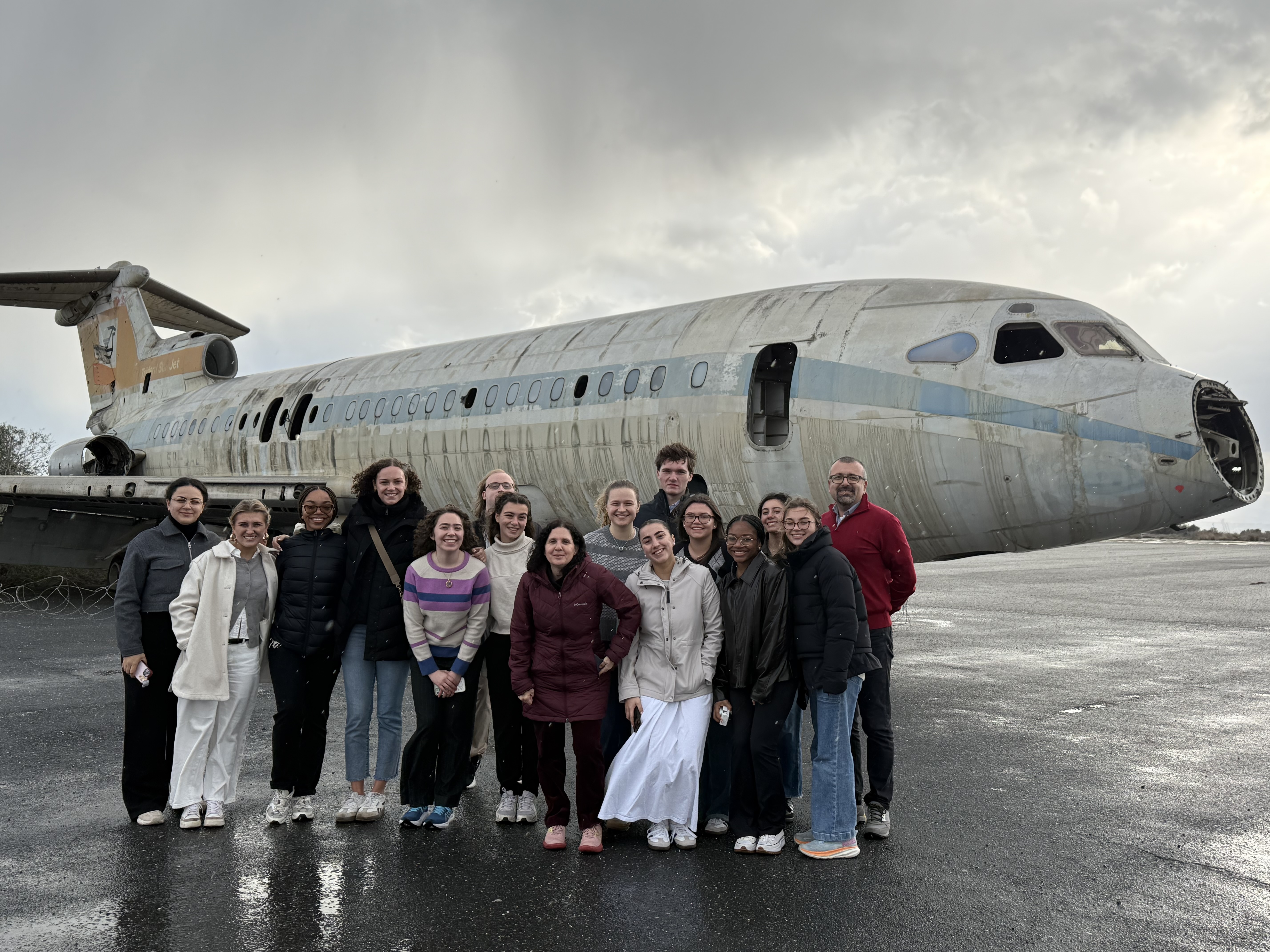
“The airport still had boarding passes on the floor and colorful airline advertisements on the walls, and houses still had scarves hanging in the closets and half-used bars of soap in the kitchen,” said Kate Gray ’27. “It was moving to see all these personal items that had been ruined by time and the elements and will probably never be reunited with their owners. We were lucky to have really knowledgeable guides who explained significant areas and gave us time to explore the space and immerse ourselves.”
Cyprus became an independent state in 1960, and shortly after, experienced violent clashes between the Greek Cypriot and Turkish Cypriot communities on the island by late 1963. The UN forces arrived in 1964 and have remained on the island since then to prevent conflict escalation between the two communities. In 1974, the two sides were divided along a buffer zone managed by the United Nations.
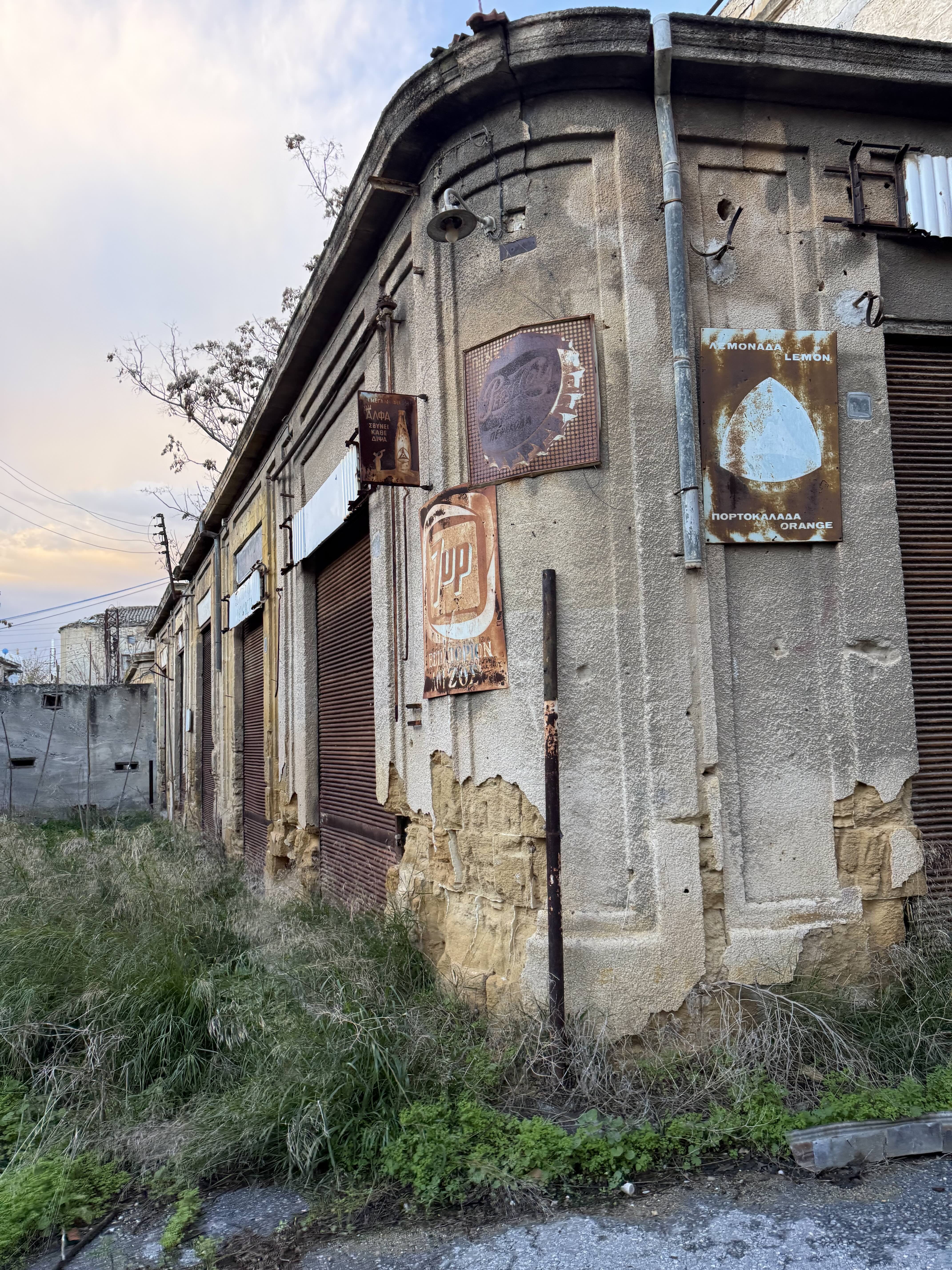
For Claire Blatt ’26, the visit with the UN “made the fragile nature of this “peace” painfully clear. The walk along the Green Line and through the abandoned airport felt surreal and heavy; there were tens of cars left untouched covered by decades of debris, homes reclaimed by nature, personal belongings scattered as if people meant to return. It was impossible not to think about the lives interrupted there, and to realize that what can seem distant or abstract to outsiders is a lived reality of loss, fear, and uncertainty for those who call Cyprus home.”
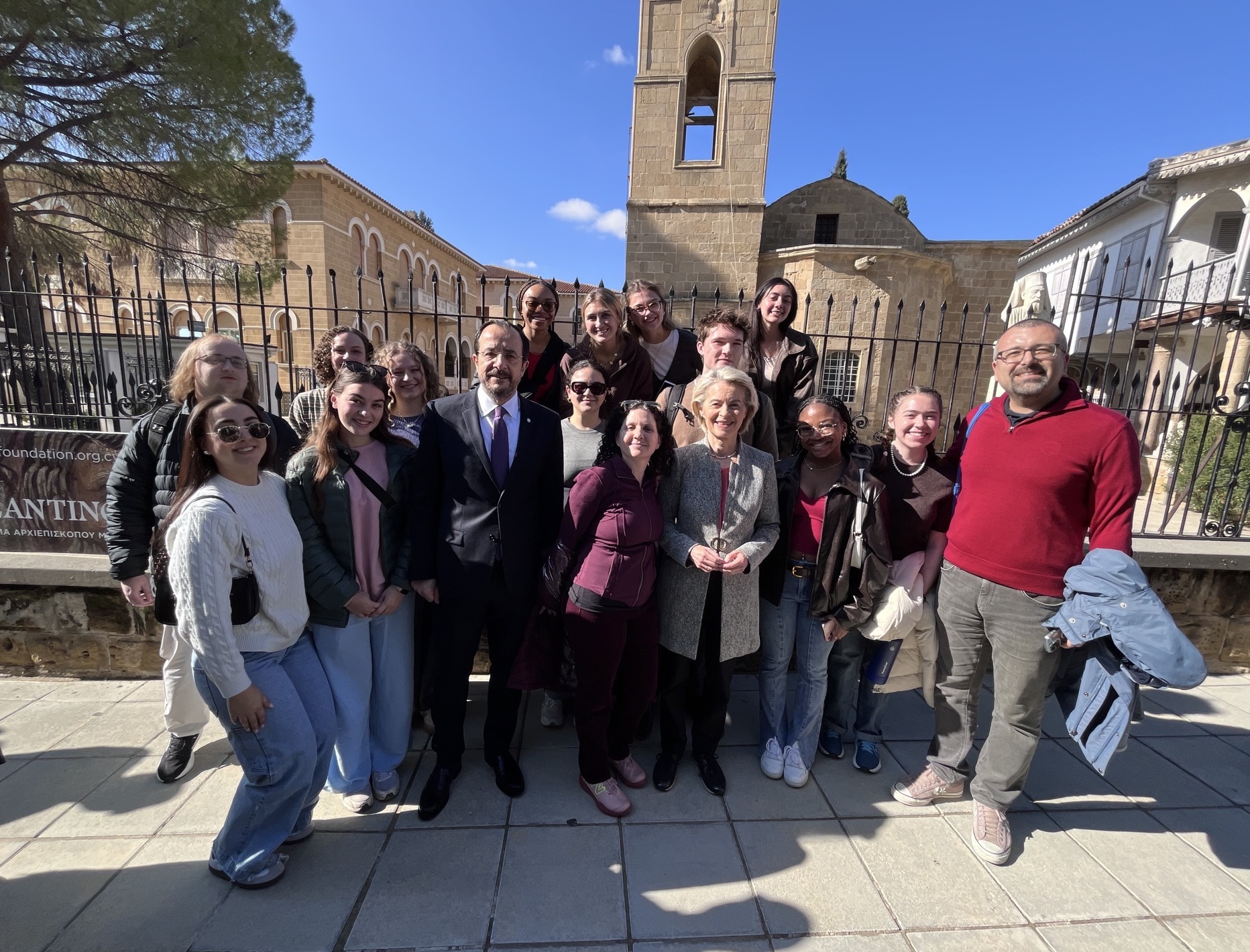
This year, the class ran into the president of the Republic of Cyprus, Nikos Christodoulides in the streets of Nicosia. The president spared some time to chat with the group before he greeted his official guest, the President of the European Commission Ursula von der Leyen. The president then introduced the group to von der Leyen. Both presidents expressed appreciation for American students’ interest in Cyprus, Europe, and cultural exchange. They also emphasized the importance of close relations between the United States and Europe.
Kesgin and Swimelar designed the course in 2019 and led its first cohort in 2022. One of the key motivations for the duo was to add “off the beaten path” study abroad destinations. The destinations of the course, Cyprus and Bosnia & Herzegovina (the past two iterations), represent a major contribution to Elon’s faculty-led study abroad programs for its geographic locations. Furthermore, the course’s thematic emphases on post-conflict societies and navigating multiple ethnic and religious identities in transition, domestic and international peacebuilding efforts, and complicated intersections of memory, narrative, and truth-telling relate the course to students’ multiple academic interests.
While the students attain foundational knowledge about divided lands such as Cyprus in the pre-departure course, they meet with a diverse array of domestic and international actors during the travel class. These meetings include major non-governmental organizations (such as civil society members, journalists, academics), international actors (US Embassy, United Nations personnel, the European Union, among others), as well as their peers (such as university students).
Anastasia Feldman ’28 said: “Here in Cyprus, we’ve been exposed to a lot of differing perspectives, activities, and cultural experiences that I’m grateful to see and do,” said Anastasia Feldman ’28. “This was an amazing opportunity to learn about how the United Nations keep the peace in a high tension environment. We were able to see locations that haven’t been touched since 1974 such as the old Nicosia airport, and walking the buffer zone between the North and South which was incredible from a historic perspective. Beyond the UN, having the opportunity to meet with the president of Cyprus as well as the president of the European Commission was an incredible experience that I’m sure I never would have had without this course.”