


Elon is growing its graduate program opportunities in Alamance County and in Charlotte in response to national trends and demand, including the expansion of its law, physician assistant and business analytics programs and a new degree in clinical mental health counseling.
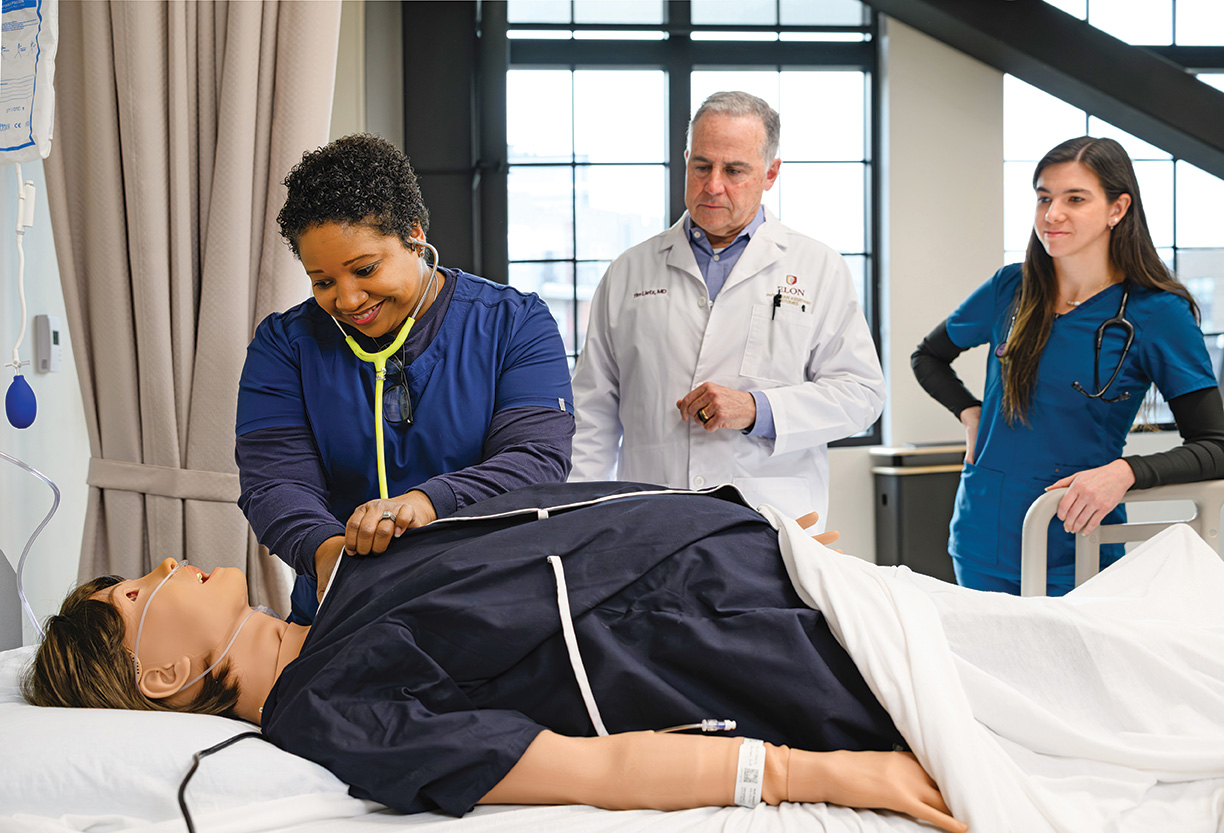
Elon’s latest cohort of physician assistant students are now on a demanding
journey, one that will lead them into hospitals, clinics and communities where skilled health care providers are urgently needed.
This year’s group is the largest in the program’s history. Elon doubled the size of its physician assistant class from 38 to 76 students, growing its capacity to prepare clinicians for communities across North Carolina and the Southeast.
The expansion reflects a broader transformation in graduate eduction underway at Elon University. From classrooms on the main campus in Alamance County to new opportunities in Charlotte, graduate education is evolving with intention and purpose.

Guided by the Boldly Elon Strategic Plan, university leaders are investing in
programs where student interest intersects with societal need — strengthening health sciences, business, counseling and legal education while positioning Elon to serve both emerging professionals and working adults seeking new pathways.
That growth builds on more than 40 years of momentum. Elon launched its Master of Business Administration in 1984, followed by a Master of Education in 1986. Graduate offerings expanded into the health sciences with a Master of Physical Therapy program in 1997, which became a Doctor of Physical Therapy in 2003. The university established its School of Law in downtown Greensboro in 2006. Today, that trajectory continues with strategic expansion in fields
experiencing high demand.
“Pursuing growth now allows us to serve regional needs while also staying true to our tradition of innovation and student-centered academic excellence,” says Allie Duffney, dean of graduate admissions.
A Changing Landscape
Elon’s growth reflects broader shifts across higher education.
“We’re seeing a decline in the traditional college-age population, so expanding strong graduate programs allows Elon to serve new learners while staying centered on our undergraduate mission,” says Rebecca Kohn, provost and vice president of academic affairs.
According to the Council of Graduate Schools, applications and enrollment in health professions, counseling, data science and business analytics programs remain strong in recent years. “Health care, law and behavioral health professions are facing sustained shortages across North Carolina and the Southeast,” Duffney says.
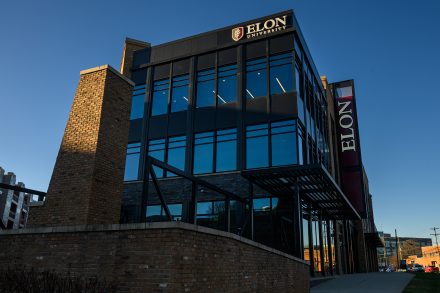
Several graduate programs are expanding to Elon’s National Campus in Charlotte, where students can learn, intern and network alongside major health systems, corporations, nonprofits and courts in a major metropolitan area.
“Growth in Charlotte allows Elon to design graduate education aligned with workforce needs and to support interprofessional collaboration and community partnerships,” says Veronica Marciano, associate professor, founding chair and program director of physician assistant studies in Charlotte. “It creates space to innovate across disciplines and opportunities for involvement in system expansion and workforce development.”
Recent and planned expansions include increasing the cohort size in the PA program on main campus; launching a second PA program, a full-time law program and Master of Science in Business Analytics Flex Program in Charlotte; introducing a Master of Science in Clinical Mental Health Counseling program; and expanding graduate certificates designed for working professionals.
A Critical Call for Health Care
In response to nationwide demand for physician assistants, Elon expanded its cohort size from 38 to 76 students in January. The program remains committed to engaged learning, hands-on clinical practice, close faculty mentorship and access to diverse, high-quality rotation sites.
Elon plans to matriculate an inaugural PA class on the Charlotte campus in January 2027, pending accreditation-provisional review by the Accreditation Review Commission on Education for the Physician Assistant (ARC-PA).
“Establishing a PA program rooted in Charlotte directly supports workforce needs by preparing highly trained clinicians who understand the local health care landscape and are invested in serving this community,” Marciano says. “Our goal is not only to educate excellent clinicians, but to meaningfully support and strengthen the health care ecosystem in Charlotte.”
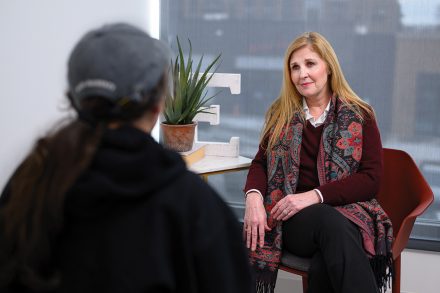
That responsiveness also shaped the Master of Science in Clinical Mental Health Counseling, which plans to welcome its first cohort in fall 2026 on Elon’s main and Charlotte campuses.
“Mental health care is no longer optional; it is essential,” says Judy Folmar, interim program director and chair of the clinical mental health counseling program. “Communities across North Carolina and the nation are facing rising rates of anxiety, depression, trauma and substance use while the supply of licensed counselors has not kept pace.”
Delivered in a 21-month accelerated hybrid format, the 60-credit program is designed to equip graduates for licensure while combining academic preparation with extensive clinical experience.
“The growth of graduate education at Elon reflects both institutional momentum and a commitment to workforce relevance,” Folmar says. “What excites us most is the alignment between Elon’s engaged-learning ethos and the preparation of advanced practitioners.”
Skills for a Changing Economy
As organizations accelerate digital transformation and integrate artificial intelligence technologies, demand continues to rise for professionals who can translate data into strategic action.
“Organizations are undergoing rapid digital transformation and increasingly rely on data and AI to make faster, higher-stakes decisions,” says Mark Kurt, associate dean for the Martha and Spencer Love School of Business. “The MSBA Flex Program in Charlotte equips working professionals with applied analytics and AI skills plus the leadership and ethical frameworks needed to translate data into responsible, measurable business outcomes — without pausing their careers.”
Built on the same STEM-certified core as Elon’s full-time MSBA, the flex format is designed for working professionals and emphasizes AI-informed entrepreneurship.
Pursuing growth now allows us to serve regional needs while also staying true to our tradition of innovation and student-centered academic excellence. — Allie Duffney, dean of
graduate admissions
“Faculty and leadership are actively refining the curriculum, building stronger employer partnerships and adapting quickly to changes in the business and analytics landscape,” says Elon alum Craig Brandstetter ’25 g’25. “That flexibility and openness to feedback mean the program can stay relevant and cutting-edge, rather than being locked into outdated structures.”
Alongside degree programs, Elon is also expanding stackable graduate certificates designed for working professionals. Certificates in health care analytics and operations excellence can serve as stand-alone credentials or pathways toward an MBA or MSBA.
The Office of Continuing and Professional Studies recently launched its second cohort of an AI certificate for professionals, delivered fully online to provide practical AI fluency grounded in ethical application.
Expanding Access to Legal Education
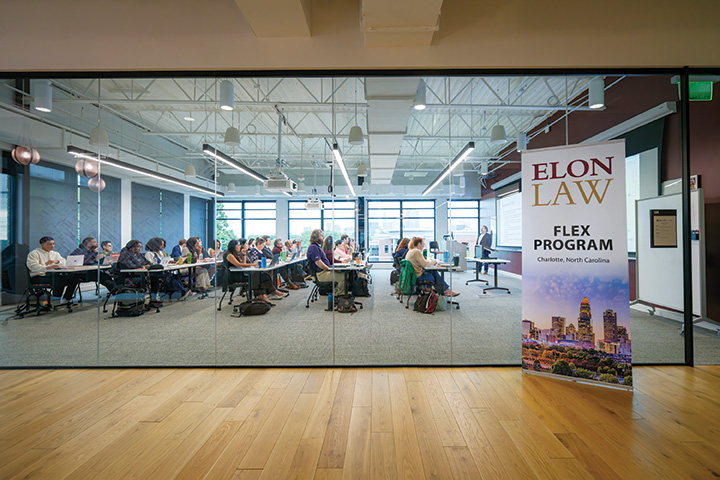
Elon Law has built a national reputation for experiential, practice-ready legal education. In 2024 the law school expanded its presence in Charlotte through the part-time Flex Program for working professionals and place-bound students seeking an in-person J.D. in North Carolina’s largest city.
That program quickly gained momentum, reflecting strong regional demand and Elon Law’s established ties to the Queen City, where nearly 10% of its alumni live and work. Elon has applied to the American Bar Association to begin a full-time law program in Charlotte in fall 2027.
“We already have strong relationships there through our programs and alumni,” says Zak Kramer, dean of the School of Law. “The legal community’s embrace of our Flex Program students confirmed that. A full-time program will allow our graduates to learn alongside Charlotte lawyers, build networks and launch careers there.”
Together, Greensboro and Charlotte position Elon’s School of Law as a statewide presence while maintaining the relationship-rich model that defines the institution.
Looking Ahead
As higher education evolves, graduate education is becoming an increasingly important part of the university’s future.
“The heart of Elon will always be our undergraduate liberal arts education,” Kohn says, “but we are strengthening and growing our graduate programs to meet changing societal and workforce needs.”
From Alamance County to Charlotte and beyond, Elon is expanding opportunities for graduate students to learn alongside health systems, businesses and legal institutions across the region. Those programs are preparing the next generation of physician assistants, counselors, analysts and attorneys to serve the communities that need them most.
-
Alexandria Duffney
Dean of Graduate Admissions
-
Rebecca Kohn
Provost and Vice President of Academic Affairs and Professor of Biology
-
Veronica Marciano
Associate Professor of Physician Assistant Studies - Charlotte & Founding Chair/Program Director of Physician Assistant Studies - Charlotte
-
Judy Folmar
Associate Professor of Clinical Mental Health Counseling and Program Director and Chair of the Clinical Mental Health Counseling Program
-
Zak Kramer
Dean and Professor of Law
-
Mark Kurt
Associate Dean for the Martha and Spencer Love School of Business & Professor of Economics