


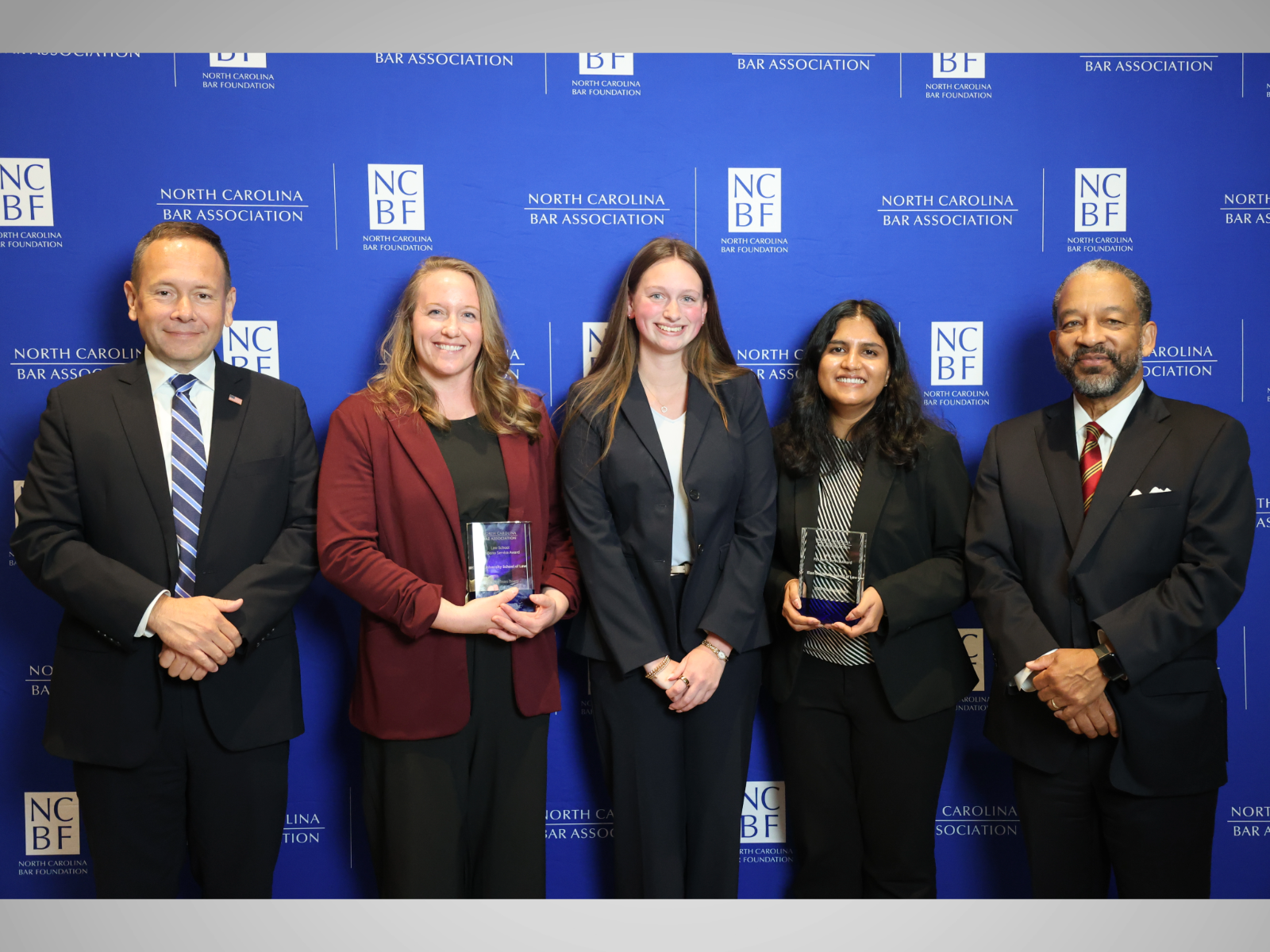
The School of Law’s Pro Bono Board worked with local attorney and alumna Abigail Seymour L’17 to provide a powers of attorney clinic for vulnerable families through FaithAction International in Greensboro.
Elon Law students arrived ready to explain legal documents and language. They left with a better understanding of what it means to practice law.
As they helped parents prepare legal documents designed to ensure their children would continue receiving care and education if the unexpected happened, students found themselves doing something equally important: listening to families navigating uncertainty and providing greater peace of mind.
Organized by Elon Law’s Pro Bono Board in partnership with FaithAction International — an agency that advocates for and serves immigrants in the Triad — the May 2025 clinic responded to concerns from families who wanted to prepare for the possibility of sudden family separation. Under the supervision of licensed attorneys — including an Elon Law alumna and a faculty member — students assisted parents in completing powers of attorney that would allow trusted caregivers to make educational and medical decisions for their children if needed.
“It was something concrete we could actually do,” recalled Molly Hohler L’26, who helped organize the clinic through the Pro Bono Board.
Families spoke candidly about their fears as they contemplated possible detention or deportation by U.S. Immigration and Customs Enforcement.
Working alongside fellow board leaders Frank Edwards L’25, Adnan Omer L’25, Saniya Pangare L’25 and Cameron Riordan L’25, Hohler organized the clinic with FaithAction International, Professor of Law Andy Haile and attorney Abigail Seymour L’17. Together, they identified a way to use their legal training to meet a community need and serve real clients.
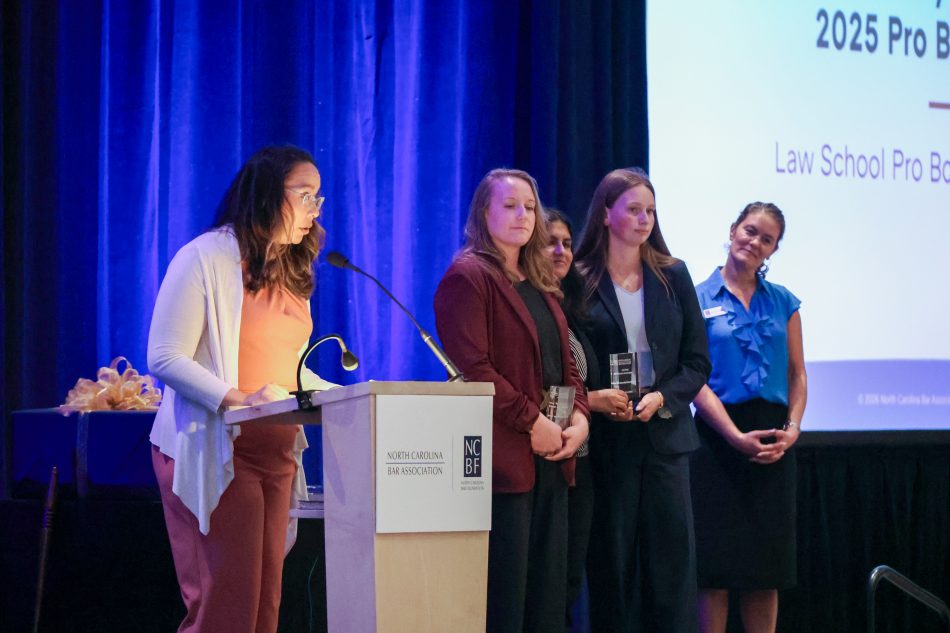
More than a year later, that student-led effort earned statewide recognition. The North Carolina Bar Association honored the clinic with its 2026 Law School Pro Bono Project of the Year Award during the association’s Annual Meeting this summer, recognizing an “outstanding law student group whose pro bono project advanced access to justice in North Carolina.
“You have that script of what you want to say, and then all of that goes out the window because you recognize the emotions your client is experiencing. It taught us that you have to approach clients with empathy, not just legal answers.”
— Adnan Omer L’25
The idea grew from conversations with FaithAction International, which identified an urgent community need and contacted the Pro Bono Board. Immigration legal advice was beyond the scope of what students could provide, but powers of attorney offered a meaningful way to serve clients under attorney supervision.
For Adnan Omer L’25 and others, the clinic quickly became much more than a legal exercise.
“People come to you on one of the hardest days of their lives,” said Omer, now an associate attorney with Vrapi Weeks Immigration Attorneys in Albuquerque, New Mexico. “You have that script of what you want to say, and then all of that goes out the window because you recognize the emotions your client is experiencing. It taught us that you have to approach clients with empathy, not just legal answers.”
Seymour L’17, who founded Greensboro-based Camino Law in 2019, was the supervising attorney for the clinic. As a former Pro Bono Board member herself, she understood the value of the experience for students. Throughout the day, she observed, interpreted and worked alongside them during client meetings in the one-day clinic.
“The main purpose of this clinic was to give people a sense of control and preparation,” Seymour said. “Peace of mind to know that if the worst were to happen, they would have a plan.” Elon Law students “were wonderful and jumped right in. They didn’t hang back.”
“The most important lesson is learning to work with clients who are facing significant challenges that we as lawyers may never experience ourselves. In class, we can debate and discuss these abstract issues of law and policy, but when you see how they affect real people, that makes it a different lesson.”
— Professor of Law Andy Haile
In recommending the clinic for the statewide award, Seymour praised the students’ “extraordinary professionalism, leadership and compassion,” writing to the NCBA that they approached the work “not as an academic exercise, but as a professional responsibility.” The project exemplified “the highest ideals of pro bono service in North Carolina,” she wrote.
Haile, who also supervised students during the clinic, said the experience demonstrated why experiential learning is critical for legal preparation. Some skills can’t be learned in a classroom.
“The most important lesson is learning to work with clients who are facing significant challenges that we as lawyers may never experience ourselves,” Haile said. “In class, we can debate and discuss these abstract issues of law and policy, but when you see how they affect real people, that makes it a different lesson.”
For Pangare, whose family immigrated to the United States, the project carried special meaning.
“It was an opportunity to help people feel more secure in their homes, their surroundings and their communities,” said Pangare — now an associate attorney at Hall Booth Smith P.C. in Asheville, North Carolina. “We wanted to help a community we knew felt vulnerable and let them know we were there to support them.”
“We have unique skills as soon-to-be lawyers. The more we can use those skills to help people, the better lawyers we become in the process.”
— Molly Hohler L’26
She joined Hohler and Shannon Ward L’26, current Pro Bono Board co-director, in accepting the award on behalf of Elon Law during the NCBA Annual Meeting on June 26.
Hohler said that public service has been a throughline in both her personal and professional life. Serving on the Pro Bono Board gives her an opportunity to channel that instinct alongside classmates who share a commitment to service.
“I love working with clients. It gives me new energy,” Hohler said. “We have unique skills as soon-to-be lawyers. The more we can use those skills to help people, the better lawyers we become in the process.”