


The article explores how the body’s antiviral defenses can both limit and enhance the effectiveness of viruses being developed as cancer therapies.
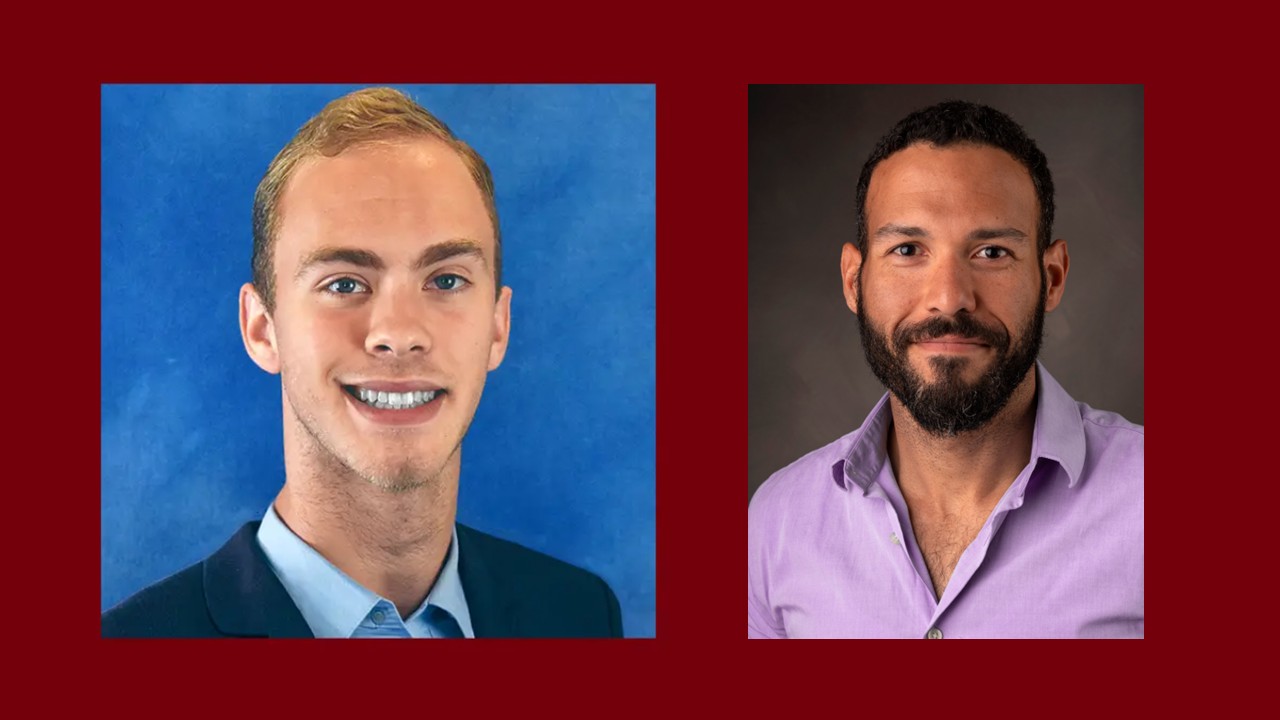
Elon undergraduate researcher Alex Roberts ’27 and Assistant Professor of Biology Efraín Rivera-Serrano have published a commentary in the Journal of Cancer Immunology examining the complex role of the immune system in oncolytic virotherapy, an emerging cancer treatment strategy that uses viruses to selectively infect and kill tumor cells.
The article, “Innate Antiviral Immunity as a Double-Edged Determinant of Oncolytic Virotherapy Outcomes,” explores a central challenge in the field: the same immune defenses that protect cells from viral infection can also influence whether a cancer-targeting virus succeeds as a therapy. Strong antiviral responses may stop a virus before it can spread through and destroy a tumor, while those same responses can help recruit immune cells, improve recognition of cancer cells and promote longer-lasting antitumor immunity.
Rather than simply maximizing viral replication or suppressing antiviral immunity, Roberts and Rivera-Serrano propose that effective therapies may depend on identifying a “productive immune window” in which enough viral replication occurs to kill tumor cells while preserving the immune activation needed to generate a broader anticancer response. The commentary highlights mammalian reovirus as an example of how viral genetics, tumor cell type and antiviral signaling may work together to determine therapeutic outcomes.
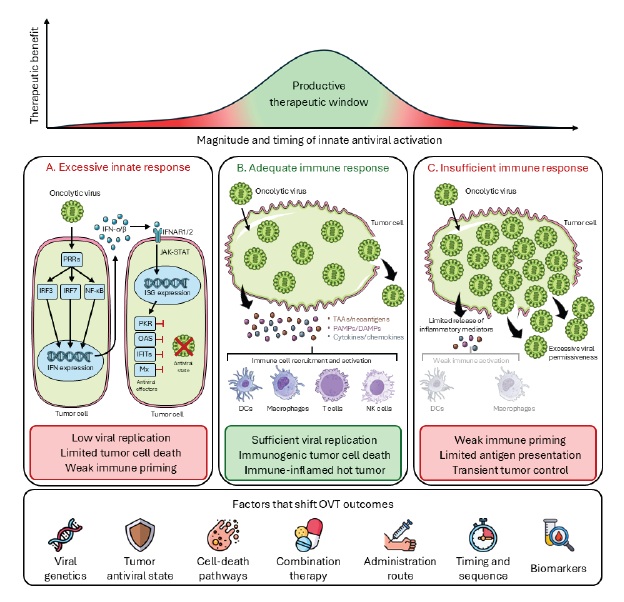
The topic directly complements Roberts’ ongoing undergraduate research in the Rivera-Serrano Lab. His project investigates whether targeting antiviral pathways, including type I interferon signaling and the antiviral protein PKR, can enhance the ability of reovirus to infect and kill human fibrosarcoma cells.
Roberts has received external funding for his research, recently completed Elon’s Summer Undergraduate Research Experience, and presented his research at the 2026 annual meeting of the American Society for Virology in Minneapolis. He will continue the project during his senior year as the Rivera-Serrano Lab works to better understand how the interactions between viruses, cancer cells and the immune system can inform the development of more effective oncolytic virus therapies.