


Published in the Journal of Sport Management, the new research draws on the experiences of 16 NCAA head coaches to reveal how sudden job loss can affect professional identity, well-being, finances and family life.
Shaina Dabbs, associate professor and chair in the Department of Sport Management, and alumna Brynja Burton ’25 are among the authors of new research examining the lasting personal and professional effects of unexpected job loss on women college head coaches.
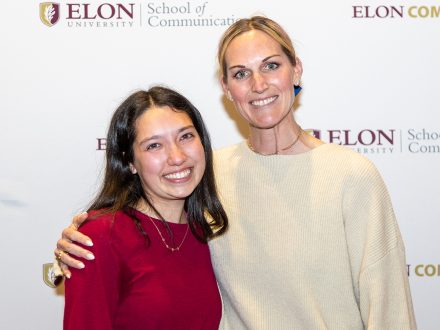
The article, “In the Line of Fire: Examining the Lasting Impacts of Unforeseen Career-Defining Moments for Women College Head Coaches,” was published Sept. 8 in the Journal of Sport Management, a leading scholarly journal in the sport management field. Dabbs and Burton collaborated on the research with Jeffrey Graham of Texas A&M University and Anton Schulz of Texas Tech University.
Using in-depth interviews with 16 women NCAA head coaches, the researchers explored how coaches responded to unexpected career-defining moments, primarily termination or institutional investigations. Their analysis identified three interconnected themes: an abrupt and isolating separation from the professional world; an attack on personal and professional identity; and lasting consequences affecting finances, health, families and future plans.
Rather than viewing forced job loss simply as a professional transition, the research frames the experience as a broader life crisis and points to the need for more humane off-boarding practices within sport organizations, including compassionate communication and access to independent mental health, financial and career-transition resources.
“This topic is important to me because the experiences of women coaches following an investigation or forced exit are rarely discussed openly,” Dabbs said. “These women entrusted us with deeply personal stories about losing not only their jobs, but also their professional identities, financial security, relationships, and sense of belonging.”
Dabbs said she hopes the findings will draw greater attention to the experiences of women coaches and encourage sport organizations to reconsider how they handle difficult career transitions.
“I wanted this research to give them a voice, shed light on a serious problem within college coaching, and encourage sport organizations to develop more ethical and humane exit strategies,” she said.
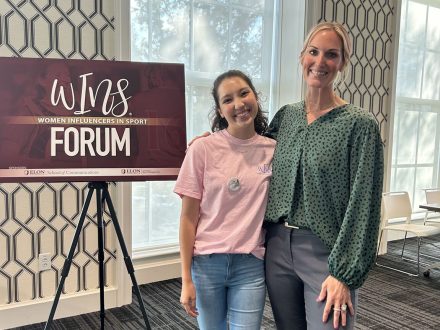
The publication also represents the culmination of a faculty-student research collaboration between Dabbs and Burton, who worked on the project while an Elon student. Burton played a pivotal role in the study’s qualitative data analysis, working with the 16 interview transcripts and collaborating with the research team to examine, code and organize the coaches’ experiences into the themes ultimately presented in the article.
Dabbs mentored Burton throughout the process, teaching her how to conduct qualitative data analysis and write the methodology section of a scholarly article.
“Her careful engagement with the participants’ stories contributed meaningfully to both the rigor of the analysis and the development of the manuscript,” Dabbs said.
For Dabbs, Burton’s involvement illustrates the value of providing students opportunities to participate directly in research. Such collaborations allow students to apply concepts learned in the classroom while gaining firsthand experience with how scholarly research is conducted and developed.
“They learn to work carefully with evidence, recognize patterns, question their assumptions, and communicate findings responsibly,” she added.
Another benefit? The experience can also reshape how students view their own place within an academic and professional community.
“Students gain confidence from knowing that their work can contribute to meaningful conversations in their field,” Dabbs said. “Mentored research helps them see themselves not only as students, but also as scholars and professionals whose ideas and contributions matter.”