


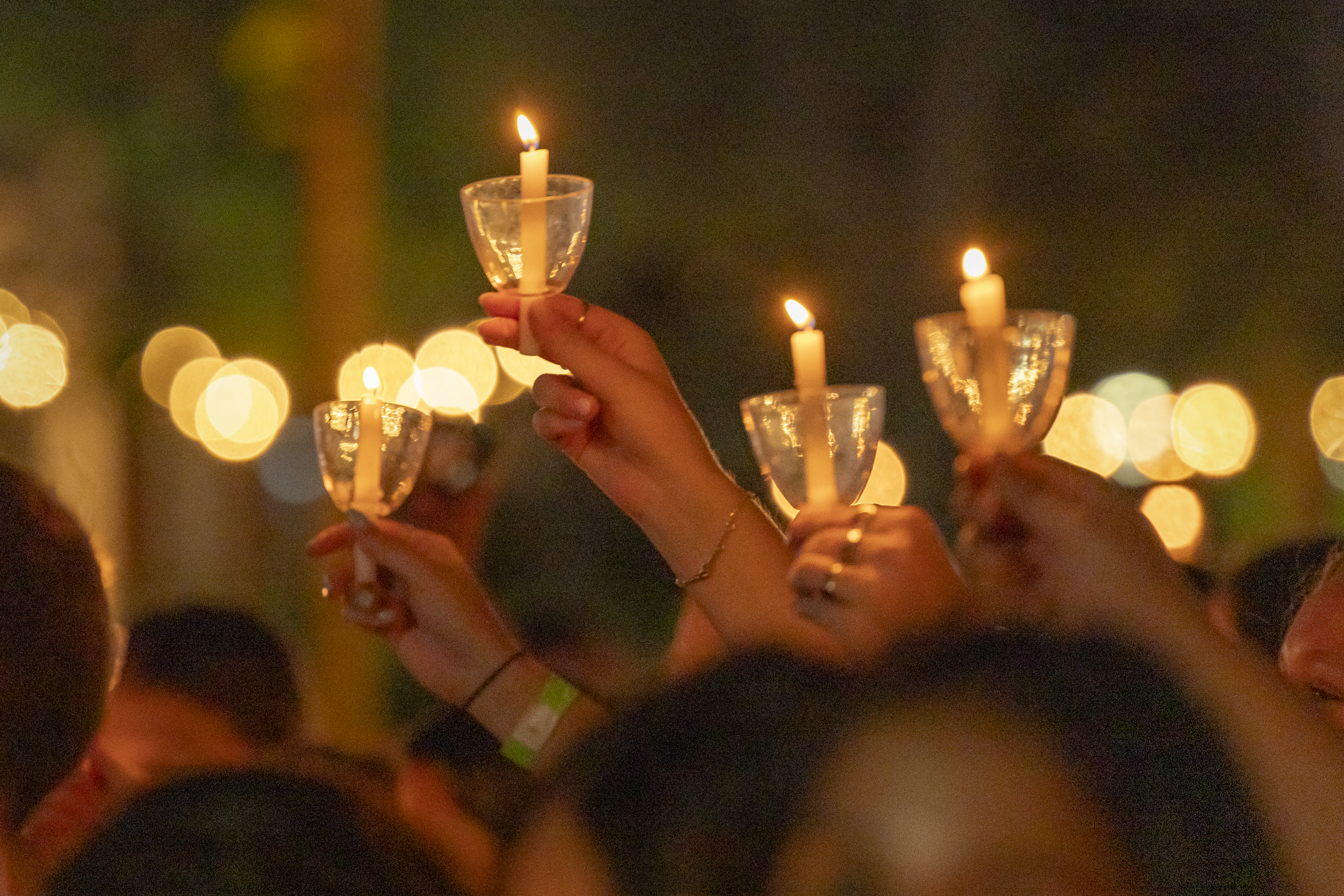
Through signature traditions, student-led initiatives, inclusive dining practices and vibrant religious and spiritual organizations, Elon prepares graduates to navigate a diverse and interconnected world with respect and understanding.
Elon University’s commitment to multifaith engagement remains a defining feature of campus life, intentionally shaped and strengthened through the Multifaith Strategic Plan.
While university administrators and faculty report that the word “multifaith” is often associated solely with belief in transcendent beings, they emphasize that, at Elon, it encompasses a broader invitation for the community to explore questions of meaning, value and purpose across religious, spiritual, ethical and secular worldviews.
The Multifaith Strategic Plan, developed in 2023, aligns with the Boldly Elon Strategic Plan and outlines four guiding goals:
- Increase religious diversity
- Foster a more equitable and inclusive campus community
- Support meaningful multifaith learning and engagement opportunities
- Articulate the educational value of multifaith diversity, equity and inclusion for all.
Together, they say, these goals build upon Elon’s longstanding traditions while expanding how the university honors and supports worldview diversity. The strategic plan affirms that graduates should be equipped to navigate a world shaped by differences in religion, belief systems, values and ways of life and that such preparation begins on campus.
Spirit of shared meaning
One of the most visible expressions of this commitment is Numen Lumen: Senior Baccalaureate Reflection, held Under the Oaks during Commencement Week. Reimagined in 2022, the ceremony reflects the Elon motto “numen lumen,” meaning “spiritual light” and “intellectual light.”
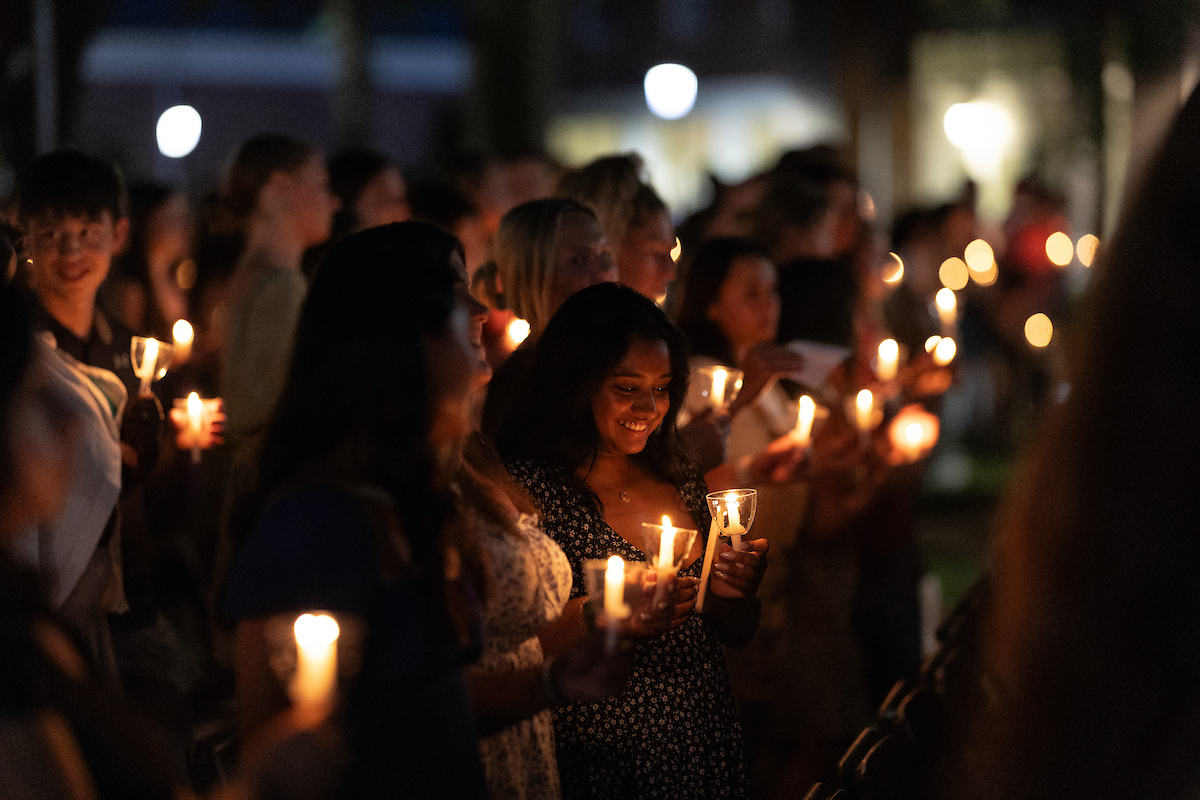
Rather than a traditional sermon, the gathering centers on shared reflection, celebration and inspiration, featuring student voices alongside readings and blessings drawn from a wide range of religious and cultural traditions.
“This will be a place for seniors to be able to come together with their friends and reflect together on their Elon journey,” said Rev. Kirstin Boswell, university chaplain and dean of multifaith engagement, when the redesign was introduced. “Baccalaureate is being reimagined as a space of pure celebration of the diversity within our graduating class.”
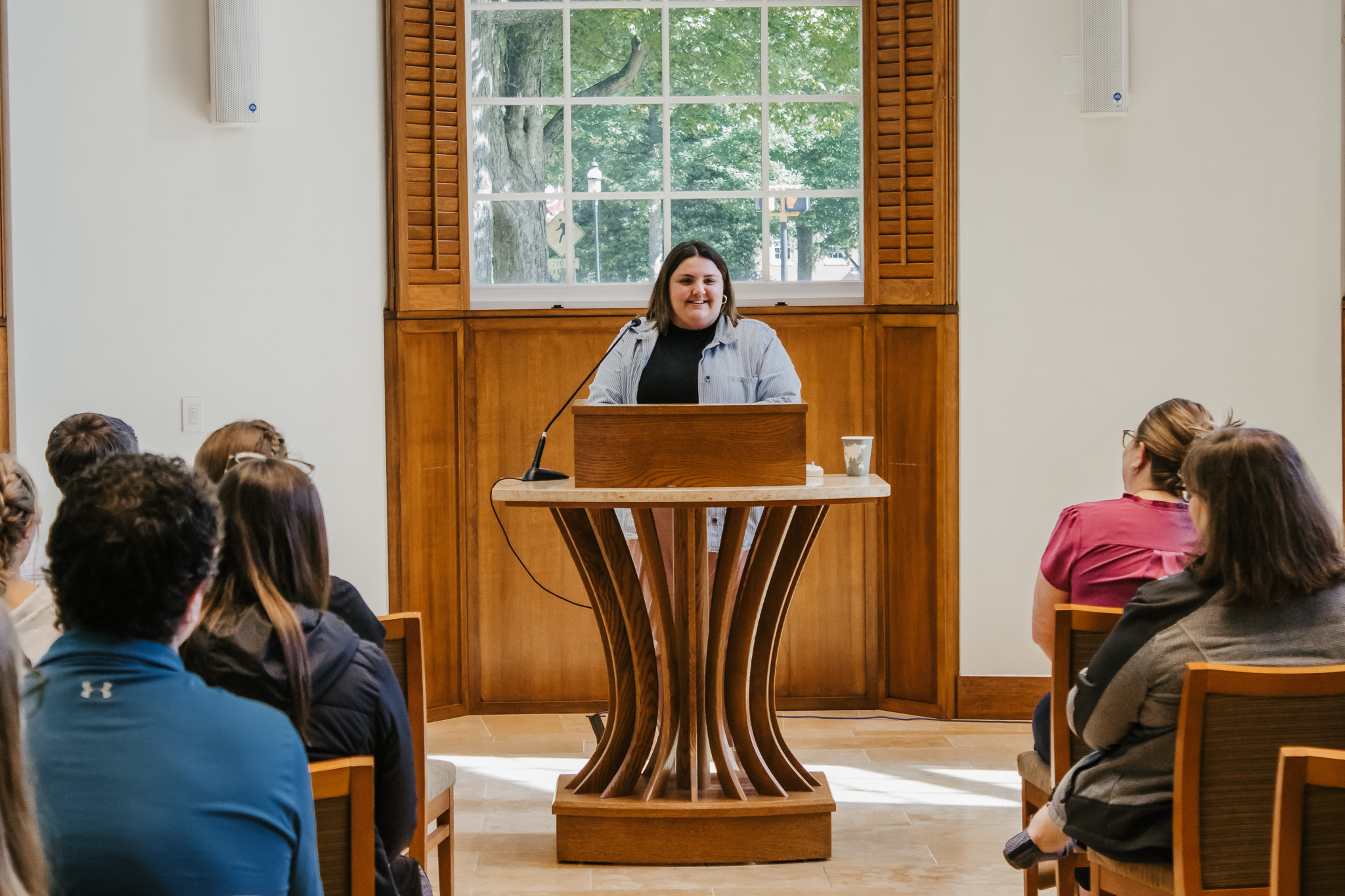
That same spirit of shared meaning is visible each December during the Festival of Lights and Luminaries, one of Elon’s most cherished traditions. The event brings the campus community together to learn about and honor a variety of religious, spiritual, ethical and cultural traditions, reinforcing the idea that multifaith engagement is not limited to formal spaces but woven into the rhythm of campus life.
This reflection is more than just once a year; it’s weekly. Every Thursday from 9:50 to 10:20 a.m., the Elon community is invited to Numen Lumen: A Thursday Inspiration, where they can hear members of the community share pieces of their stories, enjoy live music and artistic expression, and share in coffee and refreshments.
“These events are an invitation for every community member, regardless of religious, spiritual, or ethical tradition and worldview, to encounter perspectives and practices beyond our own,” said Hillary Zaken, director of multifaith programming and engagement. “They are unique spaces that are genuine and authentic celebrations of these important holidays, and at the same time make space for our community to practice skills of respectful engagement, learn about and honor diverse identities, and lift up the Truitt Center’s work to show that spiritual and intellectual growth belong together.”
Learning spaces
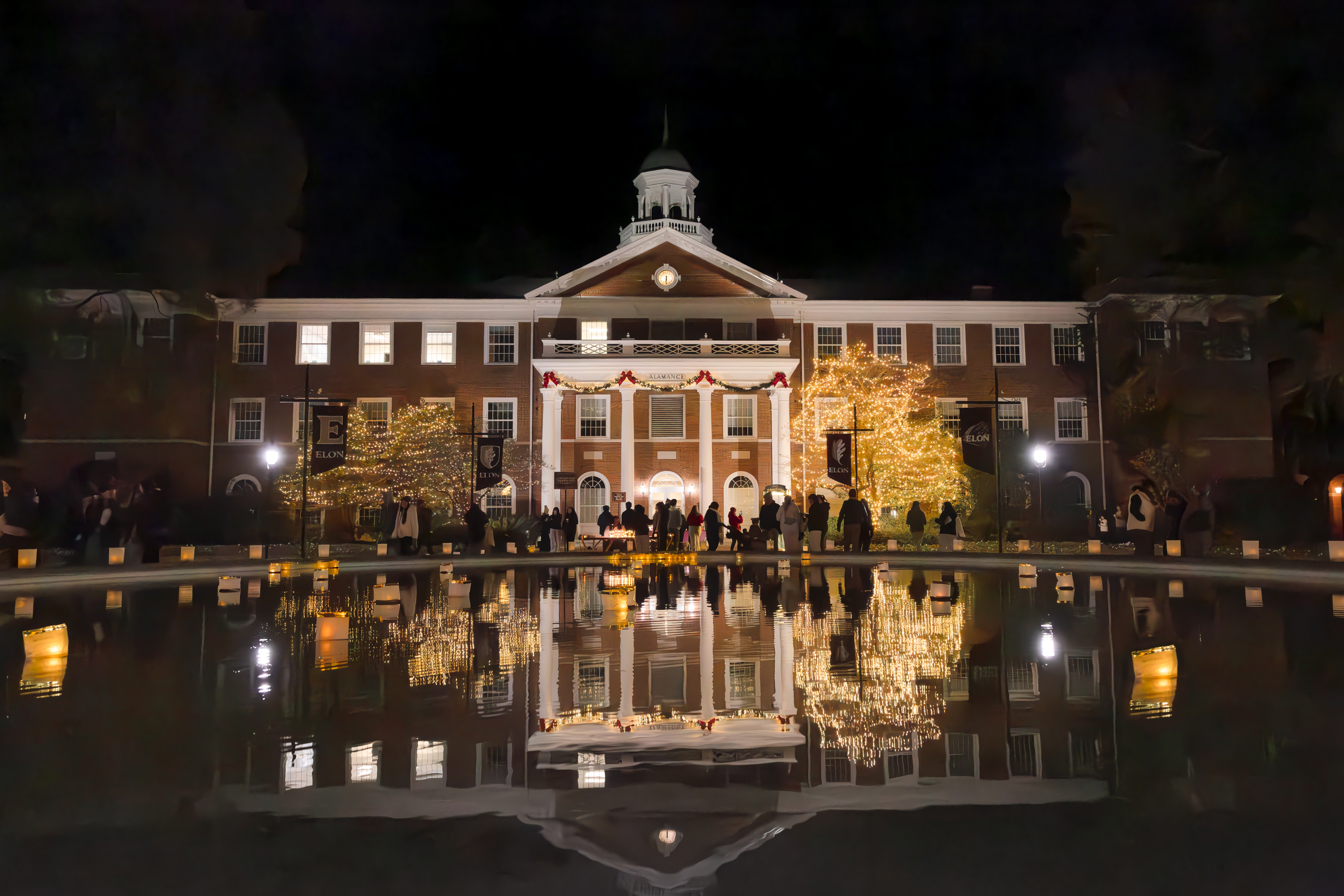
Through facilitated dialogue, educational programming and student leadership opportunities, Elon encourages exploration of worldview diversity as an essential component of a liberal arts education.
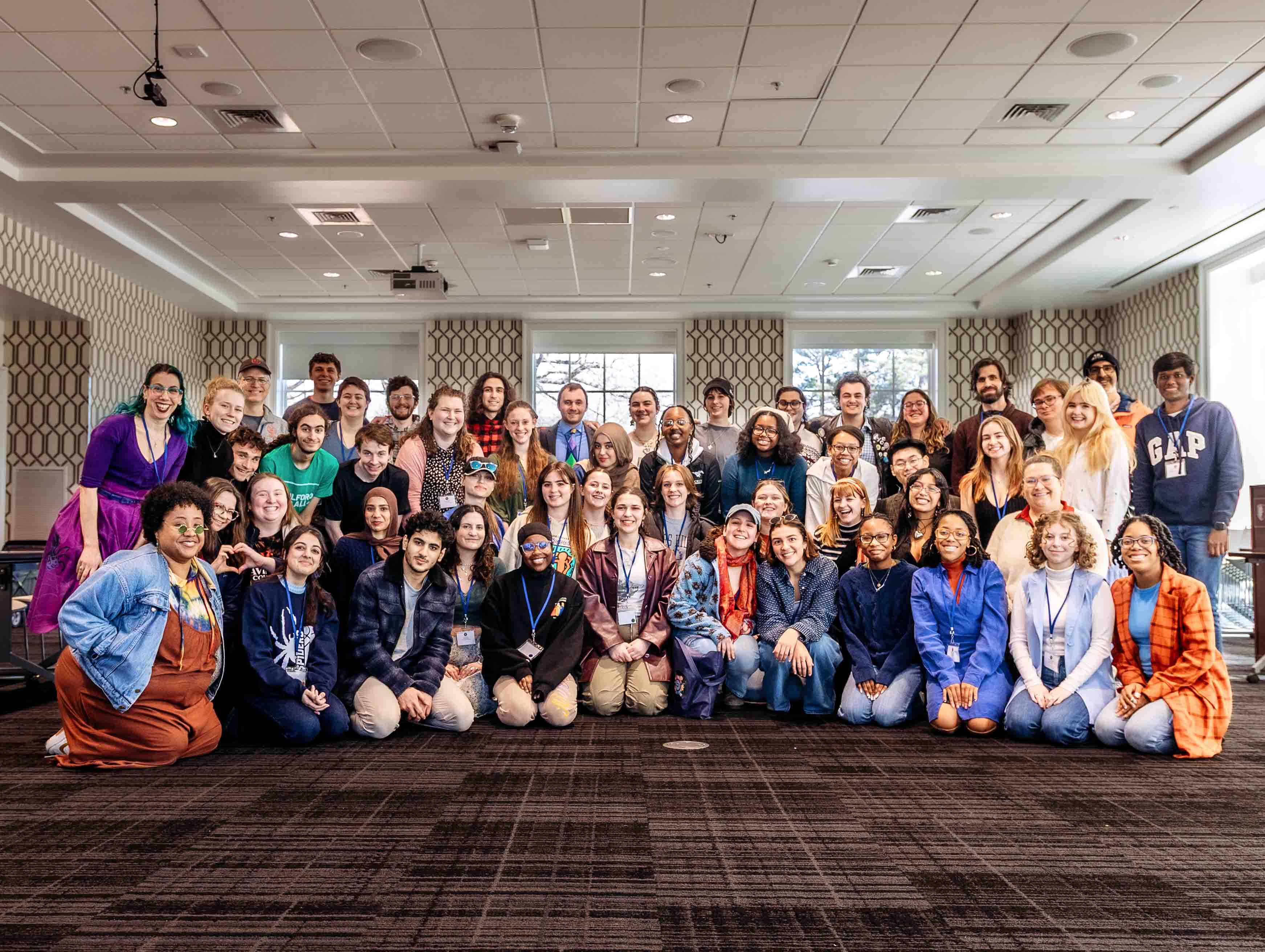
For example: the Ripple Interfaith Conference, a student-led initiative advised by Zaken that has grown steadily since its founding 10 years ago by an intern in the Truitt Center for Religious and Spiritual Life. Designed to empower and inspire interfaith student leaders, Ripple convenes participants from diverse religious, spiritual and ethical identities for dialogue and community-building.
The 2026 theme, “A Recipe for Interfaith,” invited participants in February to explore how connection is built through shared practices, particularly food. By examining meals, recipes and storytelling, the conference highlighted how everyday experiences can foster understanding across differences
“Interfaith engagement, like cooking, requires curiosity, patience and a readiness to experiment,” said Lauren Bedell ’26, co-director of the 2026 conference. “Ripple is designed to serve everyone, and its cook time is lifelong.”
Food and faith
Food also plays a role in Elon’s multifaith commitments. Harvest Table, the university’s dining partner, works closely with campus stakeholders to accommodate religious observances and dietary needs.
Passover meals are available in Lakeside Dining Hall during the Jewish holiday, to-go bags support students observing Ramadan and Lenten fish is served on Fridays for those abstaining from meat. The Phoenix Flavors Vending Machine in the Truitt Center includes Kosher, Halal and pareve options, while the allgood station in Lakeside offers Halal chicken daily.
Elon’s commitment to multifaith engagement also shows in the religious and spiritual organizations that contribute to campus community and belonging. Through the Truitt Center, students can connect with recognized student groups representing diverse traditions and practices. These include communities such as Catholic Campus Ministry (CCM), which offers weekly Mass, retreats and service opportunities; Elon Hillel and Chabad, which provide social, cultural and spiritual support for Jewish students; and the Elon Muslim Society, where students celebrate Islamic traditions and engage in interfaith dialogue.
There are also Christian ministries like Campus Outreach, InterVarsity Christian Fellowship and Fellowship of Christian Athletes, as well as contemplative and wellness groups like Iron Tree Blooming (meditation) and the Yoga Club—all open and welcoming spaces for students across different identities.
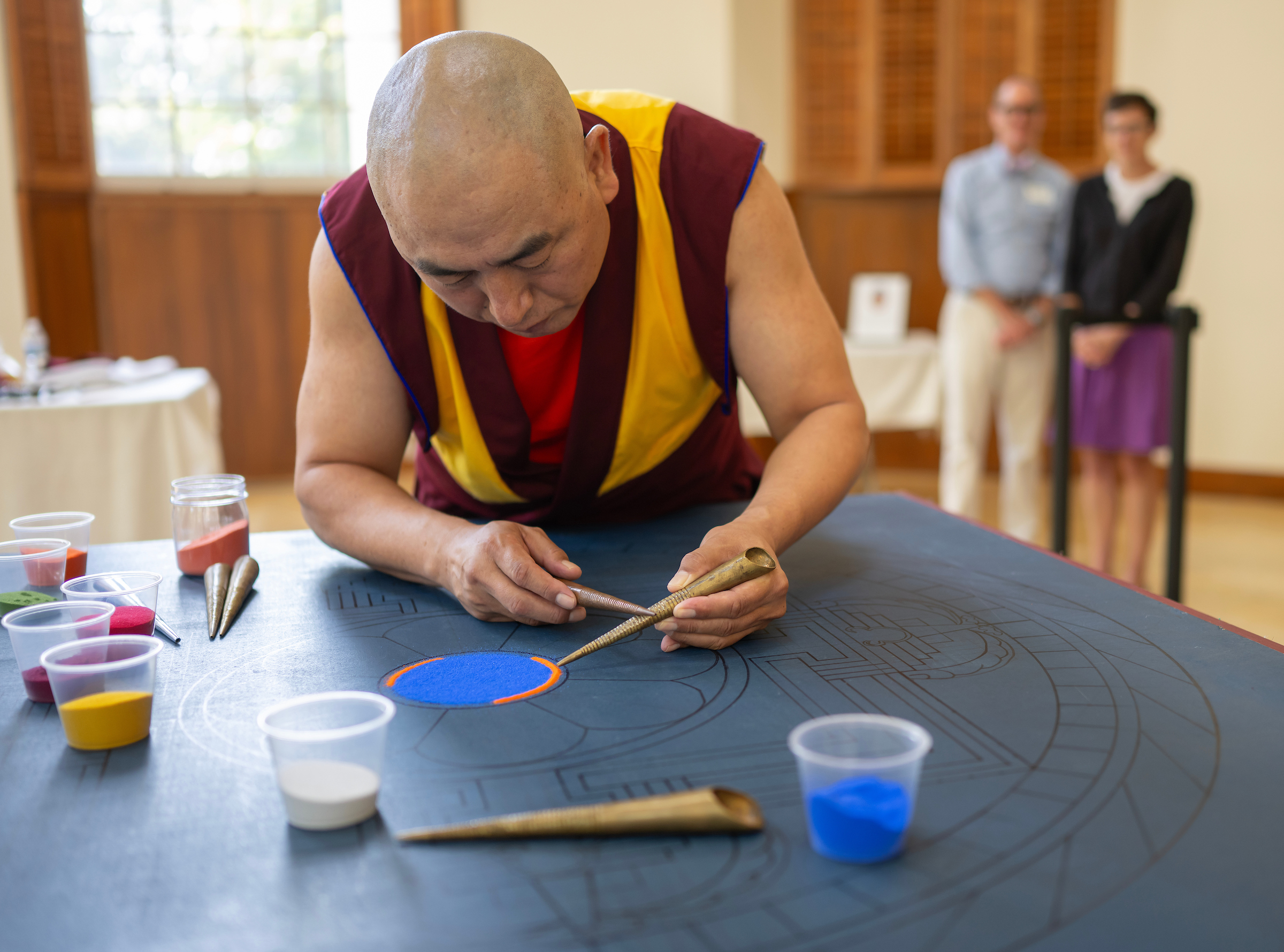
Buddhist Life offers opportunities for understanding and awareness of the Buddhadharma, including the Sand Mandala event each fall where a Buddhist monk visits Elon for three days and used colored sand to create a sand mandala, a Tibetan Buddhist symbol that fosters both healing and peace for those who view it. Elon enables Hindu students to engage with the religious tradition through events, services and forums, including the annual tradition of Diwali. A small, vibrant and diverse Pagan community is also supported at Elon.
Efforts reflect how Elon continues to honor its traditions while expanding multifaith engagement in intentional and meaningful ways. Through ceremony, dialogue, learning spaces and everyday practices, Elon affirms its commitment to preparing graduates who can engage thoughtfully and respectfully in a diverse and interconnected world.
“Elon’s Multifaith Strategic Plan is a promise to our students, faculty, staff, and the wider community that we will take them seriously as whole, complex people,” said Brian Pennington, director of the Center for the Study of Religion, Culture, and Society. “It is also a commitment to our students that an Elon education will prepare them to lead in a world where interreligious understanding is crucial to a sound global community.”
This story is the first in a series of stories focusing on Elon University’s Multifaith Strategic Plan.