Art History

Innovative and Flexible Curriculum
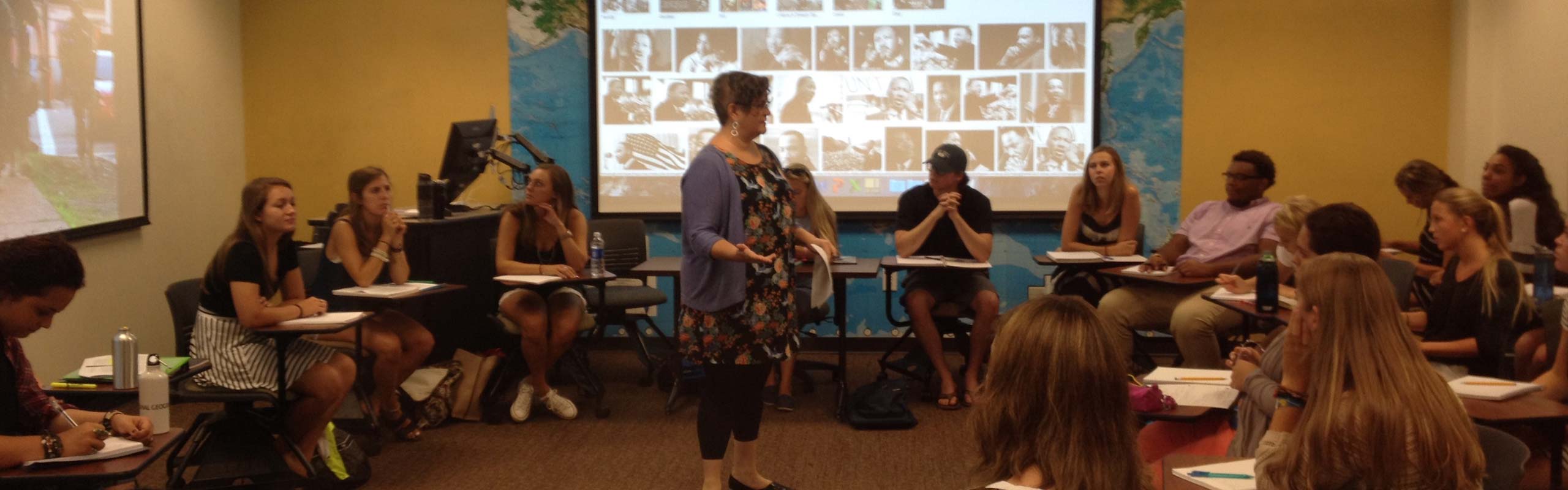
As an art history student, you will examine how images and objects shape–and are shaped by–the world’s history. Rather than memorize lists of artists, artworks, and historical dates, you learn how works of art and architecture make meaning, the contexts in which they were produced, and how these issues relate to how history has been constructed. You will explore the ideological biases that have informed your understanding of art to this point, and you will practice articulating a more knowledgeable position.
Introductory courses consider themes of power, identity, artistic exchange, collection, and display across time and from a global context. Upper-level courses cover specialized areas of analysis, including those defined by geographical region, time period, stylistic category, or conceptual theme. Art history majors complete their academic training with a senior seminar in which they research, write, and present a significant project founded on their interests. These projects may result in term papers, exhibitions, symposia, or alternative ventures developed under the guidance of the faculty.
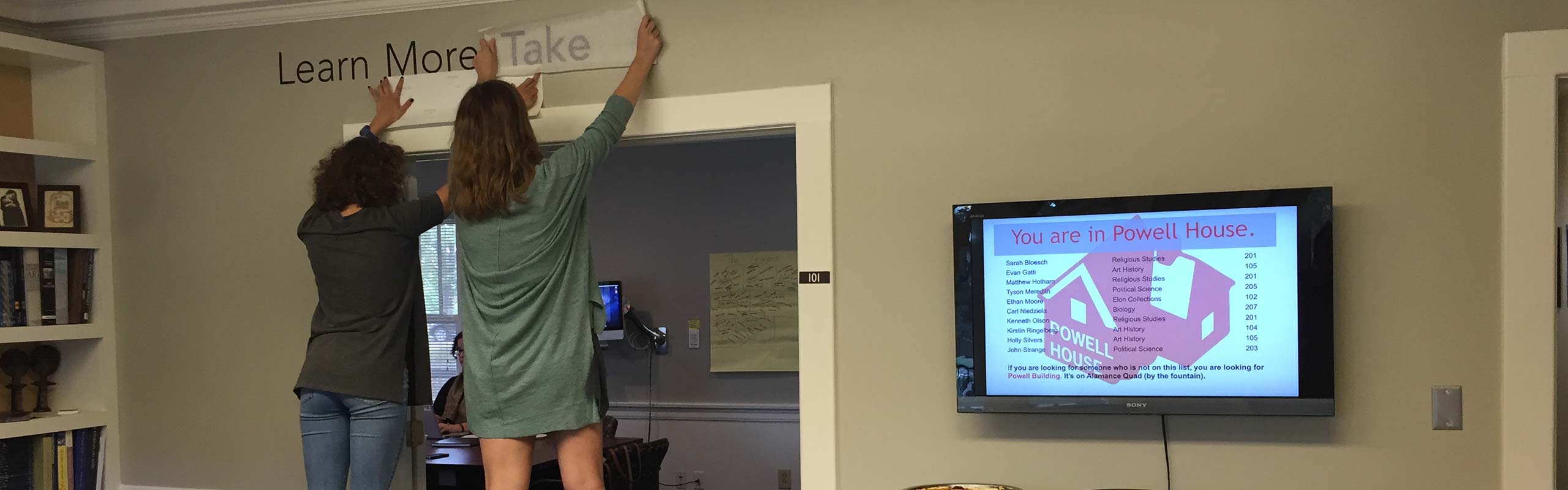
The art history program is flexible, allowing students to select a double major or minor in related fields such as History, Political Science, Philosophy, Classical Studies, Anthropology, Professional Writing & Rhetoric, Art, or Religious Studies. We also love it when students choose to feed both sides of the brain and major (or minor) in Art History and Psychology, Excercise Science, Biology, or Data Analytics (also, don’t be fooled there are lots of connections between these fields of study, read more here.) Students also combine a major in Art History with pre-professional degrees such as Communication Design, Finance, Strategic Communications, Marketing, Journalism, and Arts Administration. Art History courses at Elon are also included among the electives for more than 20 (and counting) interdisciplinary majors and minors! As our students like to say “Learn More! Take Art History! A phrase that years ago was shortened to #LMATH and appears on our annual Art History mug (#ARHMug) (You can learn more about these traditions on Instagram @ArtHistoryElon.)
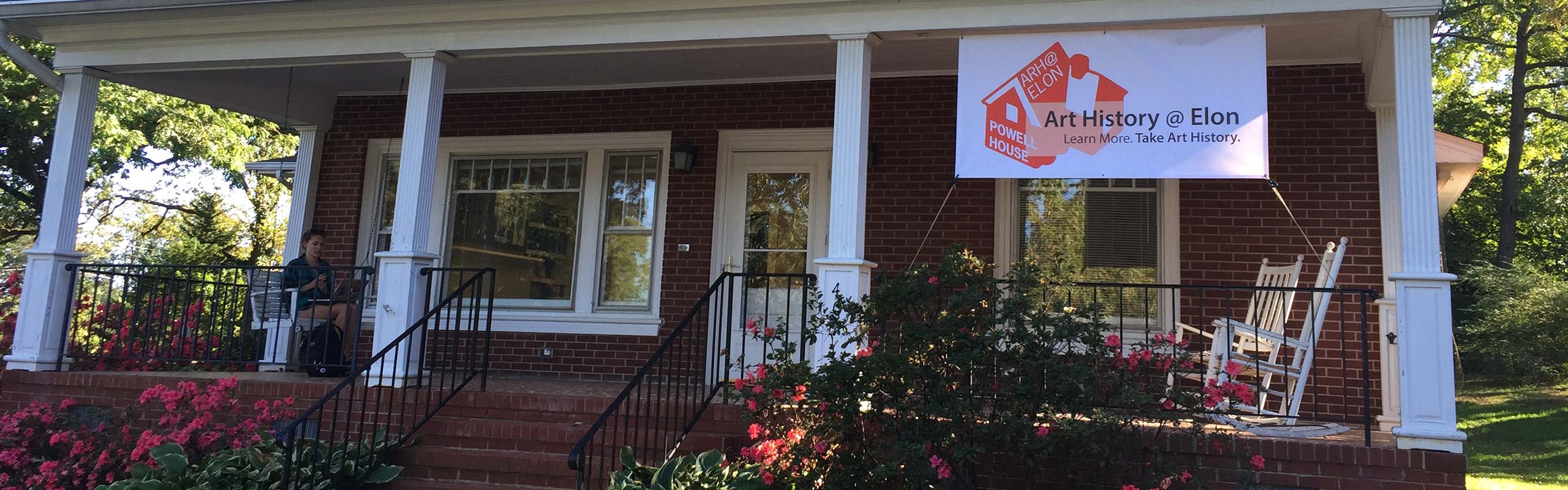
Although we are proudly part of the Department of History & Geography, which is located in Lindner Hall (where we also have a purpose-built classroom!), you will find the Art History faculty offices and our seminar room in Powell House. Come and see us! We promise you’ll #LearnMore!
As a first-year investment team analyst at a venture capital firm, I know that Art History helped me hone the critical thinking skills I use daily at work. Similar to writing art history research papers and a thesis, investment memos require diligent research and concisely synthesizing information. Strong writing skills, the ability to conduct thorough research, and the ability to self-advocate are the skills that I developed as an Art History major that have served me well on the job!

Engaged faculty
The art history faculty are active researchers who believe in the importance of student responsibility. Art history majors will be challenged to build intellectual muscles in classrooms led by professionals who are up-to-date in their knowledge and pedagogies.
Dr. Kirstin Ringelberg, professor of art history, specializes in modern and contemporary art and visual culture. Ringelberg’s book Redefining Gender in American Impressionist Studio Painting: Work Place/Domestic Space was recently reprinted in paperback, and they have published journal articles and book chapters in art history, cultural studies, visual studies, and feminist venues. In 2020, Ringelberg co-edited a special themed issue New Work in Transgender Art and Visual Culture Studies for the Journal of Visual Culture, in which they also co-authored the introduction “Prismatic views: a look at the growing field of transgender art and visual culture studies”. They have also published and presented nationally and internationally on 19th-century and contemporary American, French, and Japanese art and art historiography. In 2008, Ringelberg received the Elon College Excellence in Teaching Award and in 2013, Ringelberg received the Elon College Excellence in Service/Leadership award. They also received the university’s only full-year, full-pay sabbatical for 2016-2017.
Dr. Evan A. Gatti, professor in art history, specializes in medieval art teaches courses in Ancient, Medieval, and Premodern Art, as well as courses in museum studies, including the introductory course for the museum studies and pubic history minor, courses on the history of museums and art collections, and a course on exhibiting art from the African continent that engages works from the Elon Art Collections. She co-leads a study abroad course in Florence, titled “Bodies of Knowledge: Healthcare and the History of Art,” with Dr. Paula DiBiasio, PhD, DPT.
Gatti has published broadly in medieval studies, serving as co-editor for two interdisciplinary volumes on the medieval bishop, Envisioning the Bishop: Images and the Episcopacy in the Middle Ages (Brepols, 2014; co-edited with Sigrid Danielson) and Episcopal Power and Patronage in the European Middle Ages (998-1503)(Brepols, 2026; co-edited with Angelo Silvestri).
She has also published several book chapters: “The Ordo Missae of Warmund of Ivrea: A Bishop’s ‘Two Bodies’ and the Image In Between,” Envisioning the Bishop: Images and art history Episcopacy in the Middle Ages (Brepols, 2014); “A Reliquary Revisited: The St. Servatius Casket and its Contexts,” in A Companion to the Abbey of Quedlinburg in the Middle Ages (Brill Publishers, 2022; co-authored with Eliza Garrison); and “Diplomatic Gestures: Art and Ambivalence among the Italian Episcopacy,” in Episcopal Power and Patronage in the European Middle Ages (Brepols, 2026); and “New Crusaders, New Problems: Engaging ‘Crusader’ Content in Digital Space and the College Classroom”, in Digital Medieval Studies—Crusaders and Computers (ARC Humanities Press, 2026; first author, with Helen Davies, Kelsey Golden, and Lynn R. Huber).
Gatti has published several journal articles: “Seeing through Sigebert: A Re-Examination of the Liturgical Portraits of Sigebert of Minden (1022–36)” (Gesta, 2022), “The Vercelli Rotolus: Images of Acts of the Apostles and Acts of Imitation” (IKON, 2021); “Il Rotolo degli Apostoli e le pergamene didattiche dell’Archivio Capitolare/The Apostles’ Roll and the didactic parchments of the Capitular Archive between history and liturgies” Arte Cristiana, 2025; first author with Catherine Albers-Morris, Helen Davies, Heather Wacha, and Sivlia Faccin); and “Seeing together: an innovative and collaborative multispectral imaging initiative” Studi Francesi, 2025; third author, with Helen Davies, Heather Wacha, Catherine Albers Morris, Kalani Craig).
Gatti is one of the founding members of Episcopus: The Society for the Study of the Bishop and the Secular Clergy in the Middle Ages and Videntes: A Multispectral Imaging Collective.
Dr. Thea Ballard, assistant professor, received her PhD in art history from Duke University in 2025 with a focus on the intersections of sound, performance, and media. Her book project explores the role of voice in multimedia artworks from the 1960s to the present in terms of a notion of “conversational aesthetics.” Her art and music criticism has appeared in outlets including Art in America, Artforum, ArtReview, e-flux Criticism, Frieze, Pitchfork, and the Nation. She was previously Senior Editor at Modern Painters and Editor at the New Museum.
Rebecca Gaborek, assistant instructor in art history and classical studies is a PhD Candidate in Classical Studies at the University of North Carolina at Chapel Hill. Gaborek received dual B.A.s (summa cum laude) in Classical Archaeology and Anthropology from the College of William and Mary in 2019, where she completed an honors thesis exploring the social function of nature imagery depicted in Pompeian wall-paintings (awarded Highest Honors). In 2022, she earned her M.A. in Classical Archaeology at UNC-Chapel Hill. Her M.A. thesis argues that the owners of the House of the Vestals, Pompeii, manipulated sound in their domestic space to cultivate a pleasurable, status-boosting sensory escape embedded within the urban fabric of the city. Gaborek’s primary interests are Roman visual and material culture, particularly Roman houses and their gardens through the lenses of their décor, internal spatial relationships, and potentiality for investigating embodied experience. She has excavated most recently as a trench supervisor at the Casa della Regina Carolina at Pompeii, Italy.
Speaker Series
Since 2003, Elon’s art history program has sponsored a speaker series that has brought world-renowned art historians to campus. With four talks scheduled per year, the series allows students to interact with the major scholars in the field. Past speakers include La Tanya Autry, Timon Screech, Norman Bryson, Terry Smith, Carol Duncan, Barbara Abou-el-Haj, Frank K. Lord, Esq., Rebecca Brown, Carol Mattusch, John Neff, Gennifer Weisenfeld, Rebecca Martin Nagy, Dorothy Verkerk, Judith Rodenbeck, Rachael Ziady DeLue, David M. Lubin, Mary D. Sheriff, James Elkins, and Jaroslav Folda.
Being a double major in Art History and History has allowed me to discover a passion for museum studies and public history. History and Art History professors both have been instrumental in supporting my undergraduate research in history museums, which allowed me to independently explore my interest in museums and develop my knowledge further.

The Elon University Art Collection
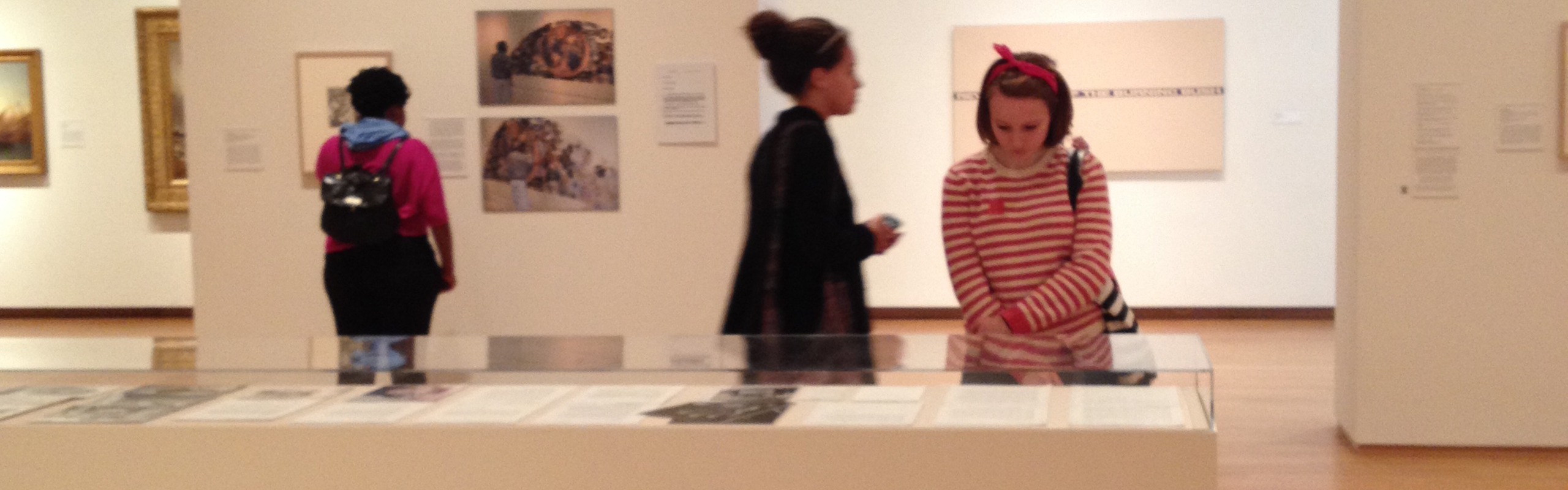
This collection includes a wide variety of visual objects from around the world; notable is the African art collection, which includes more than 300 pieces. The university collection is a living part of the Elon campus. Revolving exhibitions from the collection are housed in the library, academic classrooms and department suites. Art history majors and minors can choose to curate exhibitions on campus or research and document the collection under the supervision of a faculty mentor as part of their academic curriculum or as a work-study opportunity.
The World as Your Classroom
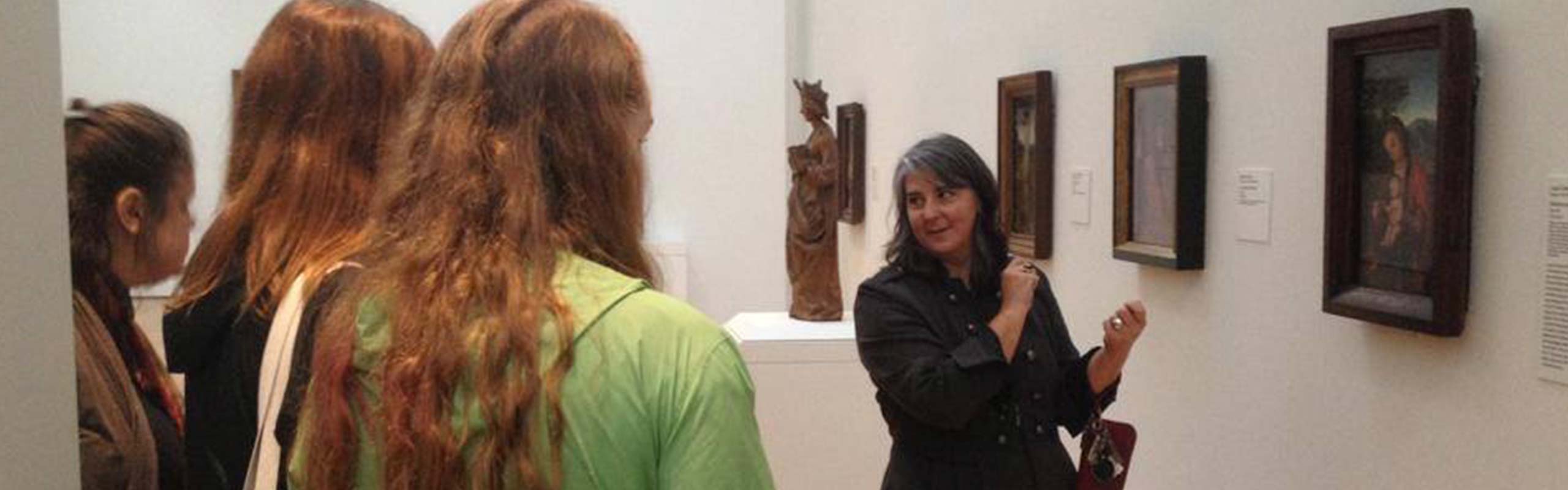
Art history majors and minors benefit from a variety of opportunities outside of our dynamic classrooms. University faculty lead study abroad programs that emphasize art historical study in countries such as France, Japan, and Italy. Majors and minors are also encouraged to take semester-long studies at universities outside of the United States, so they can experience the diverse contexts for art first-hand.
Many art history majors and minors have received course credit for internships at galleries and museums in the United States and abroad, including:
- The Solomon R. Guggenheim Museum (New York, NY)
- Christie’s Art Auction House (New York, NY)
- Pace Prints Gallery (New York, NY)
- The Mint Museum (Charlotte, NC)
- The Archives of American Art (Washington, DC)
- The High Museum (Atlanta, GA)
- The Metropolitan Museum of Art (New York, NY)
- The Smithsonian American Art Museum (Washington, DC)
- The North Carolina Museum of Art (Raleigh, NC)
- The Phoenix Art Museum (Phoenix, AZ)
- The Museum of Tolerance (Los Angeles, CA)
After Graduation
When students graduate with an art history degree from Elon, they are well-prepared for an array of postgraduate opportunities. Art history alumni have gone on to work in the fields of art practice, visual culture, museum studies, international studies, and history, among others. Recent graduates also have attended prestigious graduate programs in art history and other disciplines at:
- Université Paris-Sorbonne
- Chatham University
- University of California at Berkeley
- University of California at Riverside
- American University
- Sotheby’s Institute of Art
- Florida State University
- George Washington University
- Drexel University
- Stony Brook University
- University of Colorado at Boulder
- University of North Carolina at Chapel Hill
- Virginia Commonwealth University
Want to see where ARH@Elon can take you? Check out our GoogleMap that shows where our students have studied, participated in internships, or landed a job!
