Presenters & Panelists for the 2025 Elon Law Review Symposium
About Our 2025 Presenters & Panelists
Speakers at the 2025 Elon Law Review Symposium include leading scholars, lawyers and jurists in the areas of the First Amendment, media law and technology.
Siva Vaidhyanathan
Keynote Speaker
“The Great Scramble: How 20 Years of Social Media and Artificial Intelligence has Changed Politics, Society, and Free Speech”
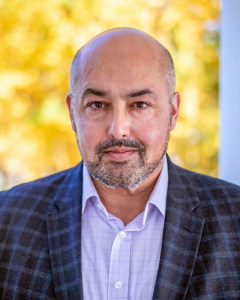 Siva Vaidhyanathan is the Robertson Professor of Media Studies and director of the Center for Media and Citizenship at the University of Virginia. He is the author of Antisocial Media: How Facebook Disconnects Us and Undermines Democracy, published by Oxford University Press in 2018. He has also authored or co-authored several other books, including “Intellectual Property: A Very Short Introduction,” published by Oxford University Press in 2017, and “The Googlization of Everything — and Why We Should Worry,” published by the University of California Press in 2011.
Vaidhyanathan directs the Center for Media and Citizenship at the University of Virginia, which hosts a Democracy Lab, produces several podcasts, and the Virginia Quarterly Review magazine. His appearances include an episode of “The Daily Show” with Jon Stewart, to discuss early social network services, and several documentary films, including the higher-education documentary, “Starving the Beast” in 2016, “Terms and Conditions May Apply” in 2013, “Inside the Mind of Google” in 2009, and “Freedom of Expression” in 2007. He has written for many periodicals, including The New Yorker, The New York Times, Columbia Journalism Review and The Washington Post. And he has appeared on news programs on BBC, CNN, NBC, CNBC, MSNBC and ABC. He is currently a regular columnist for The Guardian.
Israel Balderas
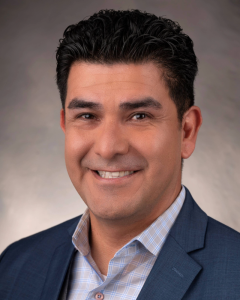 J. Israel Balderas is an Emmy Award-winning journalist, First Amendment attorney and assistant professor of journalism in Elon University’s School of Communications. He teaches courses in media law and ethics and TV reporting, drawing on decades of experience in investigative journalism, documentary production, and media law. His career includes reporting and anchoring at major TV stations in Florida, North Carolina and Texas, along with producing roles at FOX News Channel. His Emmy-winning documentary “Four Families in Mafraq” took students to Jordan to document Syrian refugee families and earned multiple national honors.
In addition to his work in journalism, Balderas brings legal expertise shaped by a clerkship with U.S. District Judge Royce C. Lamberth of the U.S. District Court for the District of Columbia and service at the FCC’s Wireless Telecommunications Bureau. He has provided pro bono legal support to migrant children and nonprofits, and served as national treasurer of the Society of Professional Journalists. He currently sits on the board of the Solutions Journalism Network.
Justice John G. Browning
 John G. Browning has been a litigator in Texas and Oklahoma for the past 36 years, including as a partner in several national law firms. Prior to returning to private practice, he served as a justice on Texas’s largest appellate court, the Fifth District Court of Appeals in Dallas. Justice Browning is currently the Distinguished Jurist in Residence at Faulkner University’s Thomas Goode Jones School of Law in Montgomery, Alabama. He also serves as Chair of the Institute for Law and Technology at The Center for American and International Law.
A nationally recognized thought leader on technology and the law, Justice Browning has been quoted in The Wall Street Journal, The New York Times, TIME magazine, USA Today, the ABA Journal, Law.com, Law 360, Business Insider, Bloomberg Law, WIRED and many other publications. He has authored five law books, including “Social Media Litigation Practice Guide” in 2014 and “Legal Ethics and Social Media: A Practitioner’s Handbook,” with Jan Jacobowitz in 2017 and 2022. He has contributed chapters to at least 10 other books and has authored nearly 70 law review articles as well as hundreds of other articles in legal journals.
Kevin Frazier
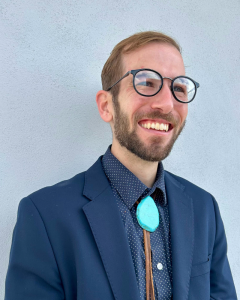 Kevin Frazier is the AI Innovation and Law Fellow at the University of Texas School of Law. He also co-hosts the Scaling Laws podcast and serves as a senior editor at Lawfare.
His scholarship on AI, regulatory design and innovation policy has appeared in leading law reviews, such as the Tennessee Law Review, and popular outlets, such as the MIT Tech Review. He additionally maintains a substack, Appleseed AI.
Lauren Gailey
 Lauren Gailey is an assistant professor of law at Thomas R. Kline School of Law of Duquesne University, where she earned her J.D. summa cum laude. Gailey has a successful career as an appellate lawyer, beginning at Jones Day Pittsburgh, from 2013 – 2016, and then in Winston & Strawn’s Washington, D.C., office from 2018 to the present.
A career highlight was briefing and second-chairing oral arguments in a case before the United States Supreme Court, resulting in a 9–0 decision in her client’s favor. Gailey served as a law clerk to Judge Thomas Hardiman of the U.S. Court of Appeals for the Third Circuit, now-Chief Judge Jeffrey Sutton, of the U.S. Court of Appeals for the Sixth Circuit, and Judge David Campbell, of the U.S. District Court for the District of Arizona. She also clerked for the federal Judicial Conference’s Committee on Rules of Practice and Procedure.
Jeff Horwitz
 Jeff Horwitz is a tech investigations reporter at Reuters. He previously was a technology reporter for The Wall Street Journal in San Francisco, where he covered Meta and social media platforms. He is the author of “Broken Code: Inside Facebook and the Fight to Expose Its Harmful Secrets.” His work on the Journal’s Facebook Files won a George Polk Award, a Gerald Loeb Award and the Chris Welles Memorial Prize.
He also has worked as a financial and enterprise reporter for the Associated Press in Washington, D.C., as well as American Banker, Legal Times, the San Bernardino Sun and the Washington City Paper.
Amanda Martin
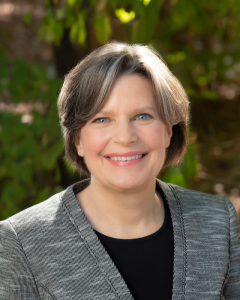 Amanda Martin joined the faculty of Duke Law School after nearly 30 years in a private practice focused on issues related to libel and privacy, the internet, intellectual property, and other speech-based concerns. She served as general counsel to the N.C. Press Association, an organization of approximately 150 North Carolina newspapers, and she routinely counseled reporters, editors and news directors about avoiding libel suits, gaining access to closed government meetings and records, and resisting subpoenas.
As the supervising attorney in the Duke Law First Amendment Clinic, Martin teaches students how to represent and advocate for both local news media and individuals who have First Amendment concerns but cannot afford an attorney. She is the co-author of the North Carolina chapter of the Media Law Resource Center’s “North Carolina Libel Survey,” the Reporters Committee for Freedom of the Press “Open Government Guide,” and is co-editor of the “North Carolina Media Law Handbook,” to which she also contributes as an author.
Lee Rainie
 Lee Rainie is the director of Elon University’s Imagining the Digital Future Center, which studies the human impact of accelerating digital change. Before that, he was director for 24 years of the Pew Research Center’s team that studied the internet and technology. At the Pew Internet Project, his team produced more than 850 reports about the social, political and economic impact of four technology revolutions: the internet/broadband revolution, the mobile connectivity revolution, the social media revolution and the artificial intelligence revolution.
Lee is co-author of “Networked: The New Social Operating System” and five books about the future of the internet, based on Project surveys. His work has been covered by network and cable news and every major global news publication.
Evan Ringel
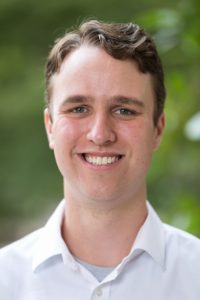 Evan Ringel is an assistant professor of media law in the Department of Communication at Appalachian State University.
Ringel has co-authored several prominent publications in the field of constitutional law and technology including “First Amendment Limits on State Laws Targeting Election Misinformation” and “Regulating Facial Recognition Technology and First Amendment Challenges.”