Digital Content Management
Elon launches Digital Content Management major to meet industry demand
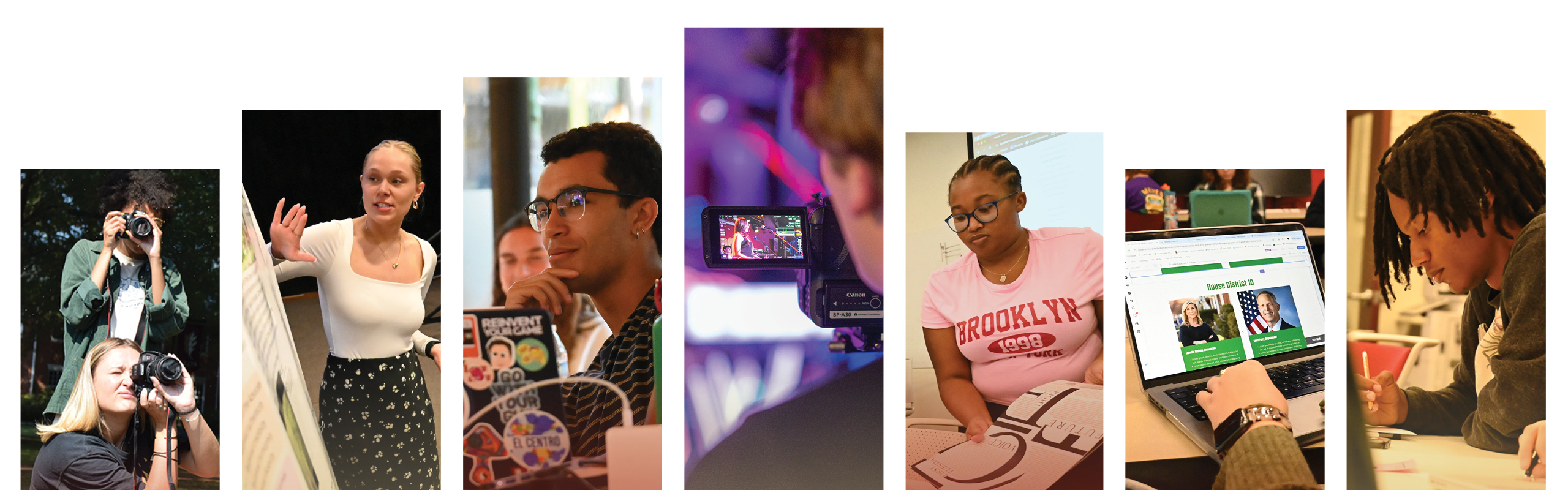
Our new Digital Content Management (DCM) major is all about translating creative ideas into measurable digital impact. Students learn how to design, write, film, edit and share content that grabs attention – whether it’s for TikTok, YouTube, streaming platforms, or the next big thing. Along the way, DCM majors hone their skills in short-form multimedia storytelling and use cutting-edge AI tools to build smart strategies that connect with real audiences.
Designed for the next generation of content creators and strategists, the program equips students to manage the full content lifecycle – from creation to distribution and analysis.
“The DCM major reflects Elon’s forward-thinking approach to education. We’re not just preparing students for their first jobs – we’re equipping them with the skills to lead, adapt and thrive in industries that are constantly evolving.”
– Vic Costello, associate professor of cinema and television arts, who co-proposed the major
Costello, who will serve as DCM’s program director, noted that one of the new major’s signature elements is its appeal as a double-major option. Students pursuing this option can apply up to 12 credit hours from their second major toward DCM electives – enabling them to complete the DCM requirements in 45 hours while gaining added depth and specialization in another area of interest.
“Designed with flexibility in mind, the DCM major encourages students to pair it with a double major in any other undergraduate field, including other majors in the School of Communications,” Costello said.
Have questions regarding the Digital Content Management major? Contact Costello at vcostello@elon.edu or (336) 278-5669.
Digital Content Management Degree Requirements & Courses
Curriculum overview
- Communications Core Curriculum (17 hours)
- Major Requirements (28 hours)
- DCM 2500 Digital Content and the Creator Economy
- CDE 2580 Principles of Communication Design
- STC 2600 Brand Identity
- MEA 2800 Data-Driven Strategies for Digital Media
- COM 3000 Persuasive Messaging
- CTA 3230 Media Production for Digital Platforms
- DCM 4970 Digital Content Management Capstone
- Electives (12 hours)
Frequently Asked Questions (FAQs)
What is Digital Content Management?
Digital Content Management is the professional practice of overseeing the entire content lifecycle – from planning and creation to organization, distribution, and performance analysis. It involves managing content across digital platforms such as websites, social media, email, apps, and streaming services. Content managers ensure that digital materials are strategically developed, branded consistently, optimized for user engagement and search visibility, and continually refined based on data and audience feedback. The role often includes using content management systems (CMS), coordinating with creative teams, and aligning digital content efforts with broader organizational goals.
What kind of jobs do Digital Content Management majors land?
Graduates of the DCM program are well-positioned for a range of careers in marketing, communications, and media. Common job titles include (Source: indeed.com):
- Brand Communications Specialist
- Content Strategist
- Content Writer
- Digital Content Creator
- Digital Content Manager
- Digital Content Producer
- Digital Marketing Coordinator
- Digital Marketing Manager
- Digital Media Specialist
- Digital Project Manager
- Marketing Content Specialist
- Multimedia Producer
- Social Media Manager
- Web Content Editor
Students will graduate with strong portfolios and real-world experience, including a required internship and capstone project, giving them a competitive edge in today’s job market.
What are the signature features of the Digital Content Management curriculum?
The DCM curriculum is built around five key themes that reflect the evolving demands of content-focused careers across industries:
- Analytics and Data-Driven Decision Making: Students explore how content performance is measured using tools like Google Analytics and social insights, and how to optimize content based on audience behavior and performance data.
- Branding and Messaging: Courses emphasize the importance of consistent voice, tone, and design across content, helping students understand how to shape and reinforce a brand identity.
- Content Creation Across Platforms: Students learn how to produce and adapt content for a wide range of digital platforms—including social media, websites, mobile apps, and streaming services.
- Emerging Technologies: Students are introduced to current and emerging technologies—including generative AI, automation tools, and evolving CMS platforms—and learn how these tools impact content creation, personalization, and strategic planning.
- Ethical and Inclusive Communication: The curriculum includes discussion of real-world ethical challenges related to representation, algorithmic bias, audience targeting, and responsible use of data and AI.
These features are threaded throughout the curriculum—from introductory courses to the senior capstone—and prepare students to be thoughtful, agile, and responsible digital content professionals.
How much additional coursework is required to double-major in DCM and another major within the School of Communications?
The Digital Content Management (DCM) major, like the legacy majors in Cinema and Television Arts, Communication Design, Journalism, Media Analytics, and Strategic Communications, shares a 17-hour core curriculum. This common foundation reduces the number of additional credits needed when pursuing DCM as a second major within the School of Communications. While Sport Management (SPT) is also part of the School of Communications, it follows a stand-alone curriculum and does not share the 17-hour core. As a result, students double-majoring in SPT and DCM should expect to complete a greater number of additional hours.
Here’s a breakdown of the additional credit hours required to add DCM to another major in the school:
| Primary Major | Major Hours | Additional Hours for DCM |
| Cinema and Television Arts (CTA) | 54 | 20 |
| Communication Design (CDE) | 62 | 16 |
| Journalism (JOU) | 54 | 24 |
| Media Analytics (MEA) | 54 | 12 |
| Strategic Communications (STC) | 58 | 16 |
| Sport Management (SPT) | 58 | 35 |
These totals reflect overlapping coursework between majors and the need to complete all distinct DCM courses and electives. Careful planning is essential to completing both majors on time. With early advising and strategic course selection, both majors can typically be completed within four years. Your academic advisors can assist you in developing a customized academic plan that aligns with your goals.
What qualifies as a DCM internship?
A DCM internship should involve work in a communications-related field, particularly in areas like social media, content creation, digital marketing, digital storytelling, photography, branding, or audience engagement. For example, a position managing a team’s social media or creating branded content for an organization would be ideal.
If you’re double majoring outside of a communications major (e.g., in Sport Management), you must satisfy the internship requirements for both majors. In such cases, you will complete two internships for academic credit – one for each of your programs. Be sure to coordinate with your advisers in each program to ensure the internships meet the expectations of both departments.
Can I take required courses in the DCM major even if I’m not a DCM major?
Yes. While the capstone course (DCM 4970) is reserved for students majoring in Digital Content Management, all other courses in the curriculum are open to non-majors, provided you meet the prerequisites and space is available.
Is there a minor in Digital Content Management?
No, there is not a standalone minor in Digital Content Management. However, students who are not majoring in one of the six School of Communications majors – Cinema & Television Arts, Communication Design, Digital Content Management, Journalism, Media Analytics, or Strategic Communications – may pursue a Communication minor. The minor requires COM 1000 and four elective courses, which can include DCM-specific coursework. This allows non-majors to develop digital content skills in areas such as branding, storytelling, and analytics.
What department is the Digital Content Management major housed in?
Digital Content Management is a stand-alone program within the School of Communications, similar to Media Analytics. It is not housed in a single department but is managed by a program director rather than a department chair. The DCM major is designed as a cross-disciplinary program, taught by faculty across multiple departments within the School of Communications.
News


Want to tour the School of Communications?
We offer 11:30 a.m. weekday tours by appointment to prospective students who want to see our facilities and student media operations. Please fill out this form to schedule your tour.